Navigating Hail Damage Roof Repair in Austin, TX
Central Texas is infamous for severe hail. Learn how to identify damage, navigate insurance, and choose the right contractor in Austin.
Austin and the wider Central Texas region sit squarely in "Hail Alley." Year after year, explosive spring thunderstorms drop massive hailstones, leaving millions of dollars in property damage in their wake. If your Austin home has recently been through a severe storm, here is your essential guide to navigating hail damage roof repair.
Step 1: Safe and Immediate Identification
Hail damage isn't always visible from your driveway. While massive hailstones can shatter skylights and dent metal vents visibly, the most insidious damage occurs to asphalt shingles.
What happens: Hail impact dislodges the protective granules on your shingles, exposing the asphalt mat beneath to Austin's blazing summer sun. Over time, UV rays degrade the exposed mat, leading to cracking, water intrusion, and eventually, total roof failure.
Do not climb on your roof to check. Instead, look for collateral damage on the ground: dented gutters, damaged AC condenser fins, or excessive shingle granules washed out of your downspouts.
Step 2: The Importance of a Professional Inspection
Before calling your insurance company, get an independent assessment. Capital City Roofing provides comprehensive, drone-assisted inspections for Austin homeowners. We document the exact size of the hail hits, the density of the damage per "square" (100 sq. ft.), and provide the undeniable photographic evidence your insurance adjuster will need to see.
Step 3: Navigating the Insurance Claim
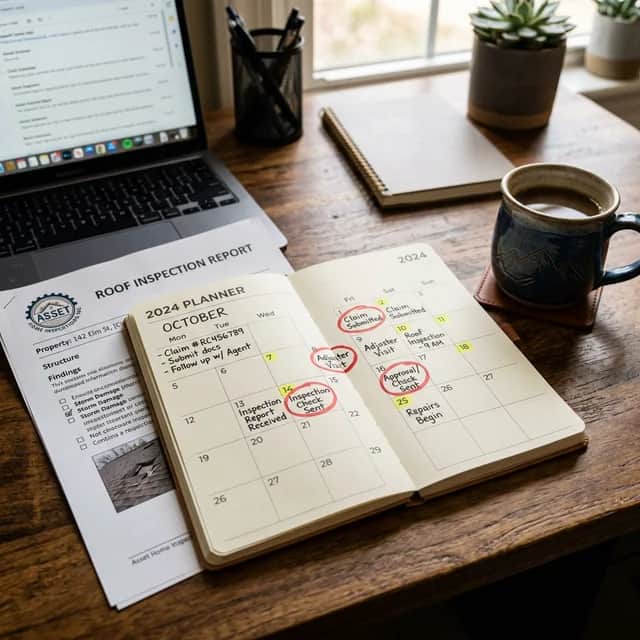
Filing an insurance claim can be intimidating. Here's the optimal workflow:
- Review your policy: Understand your deductible (often 1-2% of your home's value in Texas).
- File promptly: Most policies have a statute of limitations for filing storm damage claims (typically 365 days).
- Coordinate inspection: Have your Capital City Roofing representative present when the insurance adjuster evaluates the roof. We speak their language and ensure nothing is overlooked.
Step 4: Upgrading for the Future (Impact-Resistant Roofing)
If your roof requires replacement, this is the perfect time to upgrade to Class 4 Impact-Resistant (IR) shingles. Products like GAF Timberline AS II or CertainTeed NorthGate ClimateFlex are manufactured with polymer-modified asphalt, making them incredibly resilient against future hail strikes.
Bonus: Many Texas insurance providers offer significant premium discounts for homes with Class 4 IR roofs!
Don't wait for a leak to reveal storm damage. If your Austin neighborhood was hit by hail, schedule your free drone inspection with Capital City Roofing today.
How Austin's Hail Patterns Differ From Other Texas Markets
Central Texas hail season runs primarily from March through June, with the most damaging events typically arriving in April and May when Gulf moisture collides with dry-line boundaries along the I-35 corridor. Austin's position on the eastern edge of the Edwards Plateau means storms approaching from the west have already built significant energy by the time they reach the metro area. The result is hail that tends to arrive in concentrated bursts rather than the prolonged events common in the Dallas-Fort Worth corridor to the north.
Austin's building stock adds another dimension. The rapid growth of the last two decades means many neighborhoods have roofs that are fifteen to twenty years old and approaching the end of their rated service life. These aging roofs sustain more functional damage from the same hail event than a five-year-old roof would, because the asphalt binder has oxidized and the granule bond has weakened over time. An adjuster evaluating damage on an older Austin roof must distinguish between hail-caused fractures and age-related deterioration, which is where professional documentation becomes critical.
Navigating Texas Insurance Dynamics for Hail Claims
Texas insurance law includes provisions that differ from other states and directly affect how hail claims are processed. The state's prompt-payment statute requires carriers to acknowledge claims within fifteen days and resolve them within specified timeframes. Texas also allows policy endorsements that modify hail coverage, including cosmetic damage exclusions and percentage-based wind/hail deductibles rather than flat-dollar amounts.
Capital City Roofing's BuilderLync documentation platform captures the detail that Texas adjusters and carriers require, separating functional damage from cosmetic wear with photo evidence that supports each line item. Schedule a free 27-point inspection for a professional damage assessment. Our credentials are detailed on the certifications page.
Brad Strawbridge
Founder & CEO · Forbes Business Council Member • RT3 & NRAP Board of Directors • GAF Master Elite® • CertainTeed ShingleMaster™ • NRCA Residential & Workforce Development Committees
Brad Strawbridge is the Founder and CEO of Capital City Roofing, bringing over a decade of hands-on expertise to the industry. He is an official member of the Forbes Business Council, the invitation-only community for vetted senior-level business leaders, and serves on the Boards of Directors of the Roofing Technology Think Tank (RT3) and the National Roofing Apprenticeship Program (NRAP). A member of the National Roofing Contractors Association (NRCA), Brad has been appointed to the NRCA Residential Roofing Committee and the NRCA Workforce Development Committee, helping set national standards for installation quality and the future of the roofing labor force. Under his leadership, Capital City Roofing has earned GAF Master Elite and CertainTeed ShingleMaster Premier, the top contractor credential from each manufacturer.