Commercial Flat Roof Systems for Atlanta Businesses -- TPO vs EPDM vs PVC
Atlanta commercial building owners spend thousands on repeated flat roof repairs because the wrong system was specified from day one. This guide compares TPO, EPDM, and PVC for Georgia's punishing climate so you can invest in the right system once.
If your Atlanta commercial building has had more than two flat roof repairs in the past three years, you do not have a maintenance problem. You have a specification problem.
Georgia's climate is uniquely punishing on flat roofs. The combination of 95-degree summer surface temperatures, intense UV radiation, 50 to 60 inches of annual rainfall, high humidity, and severe thunderstorms with hail and wind creates an environment that exposes every weakness in a poorly specified or improperly installed flat roof system.
Most flat roof failures are not material defects. They are the result of the wrong system being installed for the wrong application, poor seam integrity during installation, inadequate drainage design, or deferred maintenance that allowed small problems to become structural damage.
This guide breaks down the three flat roof systems that dominate the Atlanta commercial market, explains which system fits which building type, and gives you the cost, lifespan, and warranty information you need to make the right investment.
Why Your Atlanta Commercial Flat Roof Keeps Failing
Before you invest in a new system, understand why the current one is not performing:
Wrong system for the application. A black EPDM membrane on a building with no shade in Midtown Atlanta absorbs enormous heat, accelerating degradation and driving up cooling costs. A restaurant with kitchen exhaust venting grease across a TPO membrane is degrading a system that was not designed for chemical exposure.
Poor seam integrity. The seams are where flat roofs fail first. Adhered seams (taped) are weaker than heat-welded seams. If the original installation used inadequate seam methods, the failure is a matter of when, not if.
Inadequate drainage design. Georgia delivers heavy rainfall in short bursts. A flat roof that ponds water for more than 48 hours after rain is accelerating membrane degradation, adding structural load, and creating conditions for biological growth that attacks the membrane surface.
Deferred maintenance. Small penetrations at pipe boots, HVAC curbs, and drain locations need annual sealant maintenance. Deferred maintenance at these points allows water to enter the system and damage insulation and decking beneath the membrane.
The Three Flat Roof Systems Every Atlanta Business Should Understand
TPO (Thermoplastic Polyolefin)
TPO is the dominant commercial roofing system in the Atlanta market and across the Southeast for good reason.
How it works: TPO is a single-ply membrane consisting of a thermoplastic polyolefin compound reinforced with polyester or fiberglass scrim. Seams are heat-welded using hot-air equipment, creating a continuous, monolithic barrier with seam strength that exceeds the membrane itself.
Why it dominates Atlanta: TPO's white reflective surface deflects more than 80% of solar energy, directly reducing rooftop temperatures by 50 to 70 degrees compared to dark membranes. In Atlanta's 90 to 100 degree summers, that reflectivity translates to measurable cooling cost reductions of 10% to 25% depending on building insulation and HVAC efficiency.
Best for: Office buildings along the GA-400 corridor, retail centers, warehouses, distribution facilities, Alpharetta tech corridor business parks, Perimeter Center office complexes.
Lifespan: 20 to 30 years when properly installed and maintained.
Cost range: $5 to $8 per square foot installed, depending on membrane thickness, insulation requirements, and building access.
EPDM (Ethylene Propylene Diene Monomer)
EPDM -- often called "rubber roofing" -- is a synthetic rubber membrane that has been a commercial roofing staple for over 50 years.
How it works: EPDM is a flexible, durable rubber membrane that can be fully adhered with bonding adhesive, mechanically attached with fasteners and plates, or ballasted with river rock or pavers. Seams are joined with specialized adhesive tape or liquid adhesive.
Strengths: EPDM is exceptionally puncture-resistant, handles heavy foot traffic well, and delivers proven long-term durability. Its lower material cost makes it attractive for budget-conscious building owners.
The Georgia trade-off: EPDM's standard black color absorbs solar energy, making rooftop temperatures significantly higher than reflective alternatives. In Atlanta's climate, a black EPDM roof drives cooling costs up compared to a white TPO or PVC membrane. White EPDM is available but less common and carries a premium.
Best for: Budget-conscious building owners, low-visibility roofs where reflectivity is less critical, buildings with heavy rooftop HVAC traffic, retrofit over existing EPDM systems.
Lifespan: 20 to 25 years.
Cost range: $4 to $7 per square foot installed.
PVC (Polyvinyl Chloride)
PVC is the premium flat roof system, designed for environments that demand chemical resistance, fire performance, and maximum durability.
How it works: PVC is a reinforced thermoplastic membrane with heat-welded seams identical to TPO's welding process. What sets PVC apart is its inherent chemical and grease resistance. The membrane's plasticizer formulation resists oils, animal fats, and chemical exposure that would degrade TPO or EPDM over time.
Why choose PVC: Any building that exhausts grease, chemicals, or oils onto the roof surface needs PVC. This includes restaurant kitchens with rooftop grease exhaust, medical facilities, laboratories, food processing plants, and automotive service centers.
PVC also carries the highest fire rating of the three systems (Class A) and provides superior resistance to ponding water, making it ideal for buildings with marginal drainage design.
Best for: Restaurants and food service facilities, medical offices and laboratories, automotive service centers, chemical handling facilities, Buckhead and Midtown commercial kitchens.
Lifespan: 25 to 30 years.
Cost range: $6 to $10 per square foot installed.
Which Flat Roof System Is Best for Atlanta's Climate?
| Feature | TPO | EPDM | PVC |
|---|---|---|---|
| Best For | General commercial, offices, warehouses | Budget-conscious, heavy foot traffic | Restaurants, medical, chemical exposure |
| Lifespan | 20-30 years | 20-25 years | 25-30 years |
| Cost/SqFt Installed | $5-$8 | $4-$7 | $6-$10 |
| Energy Efficiency | Excellent (white, highly reflective) | Low (black absorbs heat) | Excellent (white, highly reflective) |
| Chemical Resistance | Moderate | Low | Excellent |
| Seam Method | Heat-welded (superior) | Adhesive/tape (adequate) | Heat-welded (superior) |
| Wind Resistance | Excellent | Good (varies by attachment) | Excellent |
The recommendation for most Atlanta buildings: TPO is the default choice. Its combination of heat reflectivity, heat-welded seam integrity, competitive cost, and 20 to 30 year lifespan makes it the strongest value proposition for Georgia's climate. The energy savings alone can offset the material cost premium over EPDM within 3 to 5 years.
When to choose PVC instead: If your building exhausts grease, chemicals, or oils, PVC is the only system that will not degrade from that exposure. The premium over TPO is justified by the extended service life in chemically demanding environments.
When EPDM still makes sense: For budget-constrained projects on buildings where the roof is not a primary energy concern (well-insulated buildings, shaded roof areas), EPDM delivers proven durability at the lowest installed cost.
Energy Efficiency and Commercial Roofing in Atlanta
Atlanta's urban heat island effect makes rooftop reflectivity a significant financial factor. A white TPO or PVC membrane can reduce rooftop surface temperatures by 50 to 70 degrees compared to a dark EPDM or built-up roof, translating to:
- 10% to 25% reduction in cooling costs depending on building insulation, HVAC efficiency, and roof area
- ENERGY STAR compliance for reflective membrane systems, qualifying buildings for utility incentive programs
- Extended HVAC equipment life from reduced cooling load
- Contribution to LEED and green building certification for commercial developments pursuing sustainability credentials
Georgia Power and other local utilities offer incentive programs for commercial buildings that install ENERGY STAR-qualified roofing systems. The combination of utility incentives and cooling cost savings creates a measurable ROI on reflective membrane investments.
Commercial Roof Warranties: What Atlanta Building Owners Should Know
Not all commercial roof warranties are created equal. The two types that matter:
Manufacturer warranty: Covers material defects and, at higher tiers, full system performance. The length and coverage of the manufacturer warranty depends on the installer's certification level.
Contractor workmanship warranty: Covers installation quality. Only as good as the contractor's longevity and financial stability.
Capital City Roofing holds GAF Commercial Certified and GenFlex Commercial Certified credentials. These certifications unlock NDL (No Dollar Limit) warranties of 20 to 30 years that cover both materials and labor with no cap on claim value. An NDL warranty means the manufacturer pays the full cost of repair or replacement, including labor, with no proration and no dollar limit.
A contractor without these certifications can only offer standard material warranties that exclude labor, have dollar caps, and prorate after the first few years. On a $200,000 commercial roof, the warranty difference can be worth tens of thousands of dollars over the system's life.
Capital City Roofing's Commercial Flat Roof Process
Step 1: Comprehensive Inspection and Thermal Scan. We assess the existing roof condition, drainage patterns, penetration integrity, and insulation performance using infrared thermal imaging to identify wet insulation and hidden damage beneath the membrane.
Step 2: System Recommendation with ROI Analysis. Based on building use, budget, energy goals, and expected ownership timeline, we recommend the specific system and provide a detailed cost analysis including projected energy savings and warranty value.
Step 3: Professional Installation by Certified Crews. Every commercial installation is performed by manufacturer-trained crews under direct Capital City Roofing supervision. Heat-welded seams are tested, drainage is verified, and all penetrations are sealed to manufacturer specifications.
Step 4: Post-Install Preventive Maintenance Program. We offer structured maintenance programs that include biannual inspections, drainage cleaning, sealant maintenance at penetrations, and documented condition reporting. Preventive maintenance extends system life by 5 to 10 years and protects warranty eligibility.
Whether your building is in an Alpharetta business park, a Buckhead office tower, a Midtown mixed-use development, a Johns Creek professional center, or a warehouse along the I-85 corridor, Capital City Roofing provides the engineering expertise and manufacturer credentials to get the system right the first time.
Stop patching a roof that was wrong from day one. Call Capital City Roofing at 470-ROOF-ATL or request your free commercial roof evaluation today.
Related Reading:
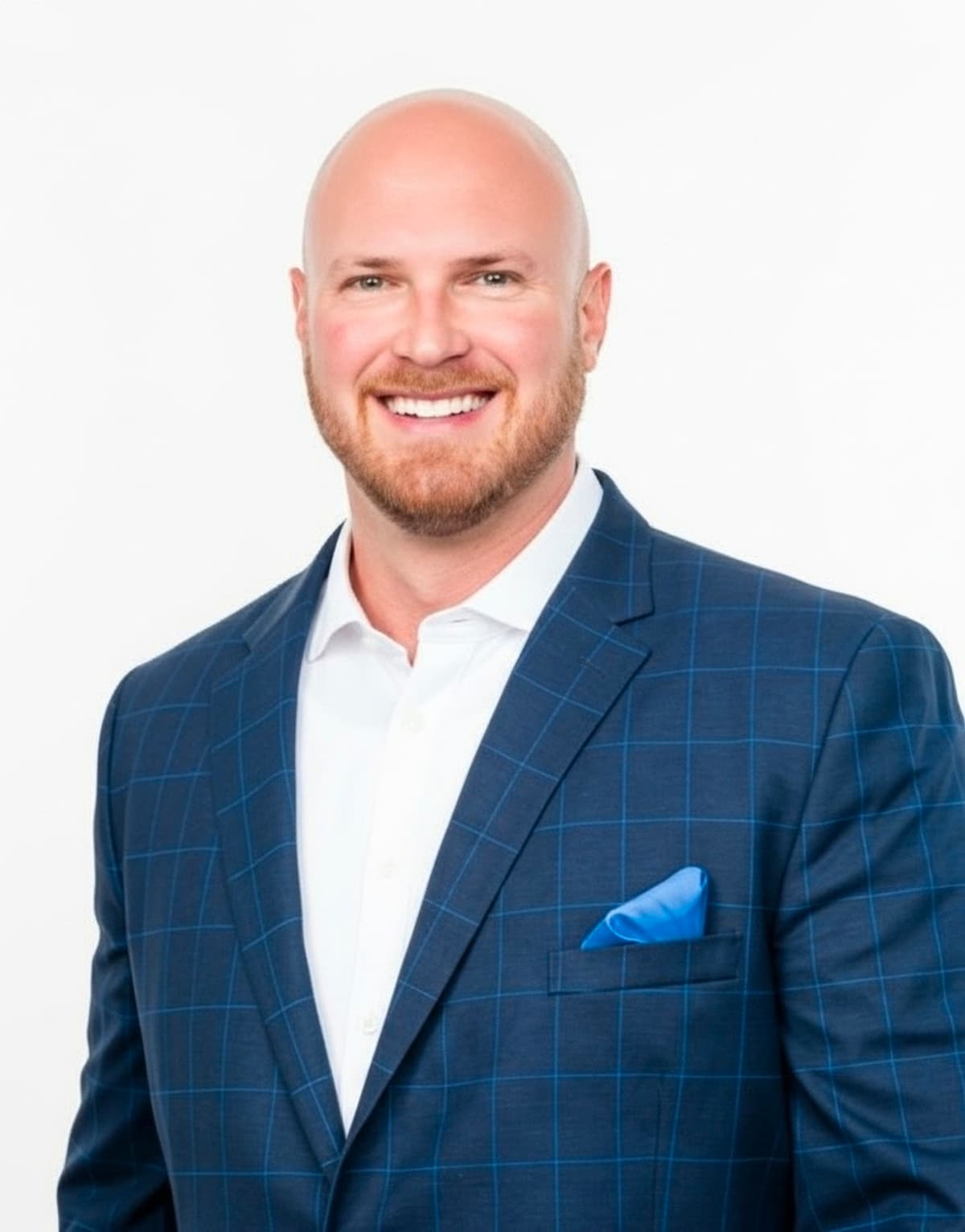
Brad Strawbridge
Founder & CEO · Forbes Business Council Member • RT3 & NRAP Board of Directors • GAF Master Elite® • CertainTeed ShingleMaster™ • NRCA Residential & Workforce Development Committees
Brad Strawbridge is the Founder and CEO of Capital City Roofing, bringing over a decade of hands-on expertise to the industry. He is an official member of the Forbes Business Council, the invitation-only community for vetted senior-level business leaders, and serves on the Boards of Directors of the Roofing Technology Think Tank (RT3) and the National Roofing Apprenticeship Program (NRAP). A member of the National Roofing Contractors Association (NRCA), Brad has been appointed to the NRCA Residential Roofing Committee and the NRCA Workforce Development Committee, helping set national standards for installation quality and the future of the roofing labor force. Under his leadership, Capital City Roofing has achieved elite certifications held by fewer than 1% of contractors nationwide.