Scaling a Home Services Business on Disciplined Systems: The Capital City Roofing Playbook
A guide for home services operators on the three layers that actually determine whether a contracting business scales: the operating system underneath the brand, the technology layer that enforces it, and the accountability structures that scale beyond the founder. Companion to the Legacy Makers TV feature with Rudy Mawer.
Most home services operators have not scaled because they have built a job they cannot leave. The owner is the system. When the owner is in the truck, things work. When the owner is at the doctor for half a day, deals stall and crews idle and customer experience degrades. That is the business that does not scale, regardless of market conditions.
Capital City Roofing founder Brad Strawbridge covered this directly in his Legacy Makers TV feature with Rudy Mawer, distributed on Inside Success Network streaming platforms. This post is the evergreen Capital City Roofing playbook that translates the Legacy Makers TV segment into a concrete framework any home services operator can apply.
The three layers that determine whether a home services business actually scales
When we work with operators (both inside Capital City Roofing's flagship operation and on the Capital City Roofing Licensing Platform), the scaling conversation always comes back to three layers. If any of the three is missing, the business does not scale durably regardless of how much marketing money goes into the top of the funnel.
Layer 1: The operating system underneath the brand
Every home services business has a brand and a service offering. Very few have the operating system underneath. By operating system we mean the standardized workflows, the data fields that populate on every job, the handoff protocols between sales and production, the inspection process, the supplement process, the financial close process, the customer communication touchpoints, the training program, the documented exception handling.
The boring stuff. The stuff nobody puts on a billboard but that determines whether the business actually delivers consistently when the owner is not in the building.
Capital City Roofing runs on an operating system built deliberately from year one. The same workflows run across residential, multifamily, and commercial. The same data fields populate on every job. The same communication scripts go to every customer. The result is consistent customer experience across every job, which is what eventually earns the 250-plus four-point-nine star Google reviews and the institutional referrals.
Layer 2: The technology layer that enforces the operating system
An operating system without enforcement is a binder on a shelf. Documenting workflows is necessary but not sufficient. The thing that actually makes the operating system work at scale is technology that enforces the workflows in real time. Leads auto-route. Stages cannot advance without required fields. Supplements get tracked. Financials reconcile.
That technology layer for Capital City Roofing and the Capital City Roofing Licensing Platform is BuilderLync, the AI-driven CRM and operating platform Brad and his co-founders built specifically for home services contractors. BuilderLync was not bought, white-labeled, or pieced together from generic SaaS tools. It was designed inside an operating roofing company by people who had to live with what they shipped.
For deeper coverage of the technology side, see What BuilderLync's V1 Launch Means for Roofing Contractors and Why the Capital City Roofing Licensing Platform Runs on BuilderLync.
Layer 3: Accountability structures that scale beyond the founder
The third layer scaling requires is accountability that does not depend on the founder walking the building. Most home services owners pretend to have this. Almost none of them actually do. The accountability lives in the owner's head. When the owner is not there, the accountability is not there either.
The fix is structured accountability. EOS, the Entrepreneurial Operating System, is the framework Capital City Roofing runs on. Weekly Level 10 meetings, Rocks, scorecards, accountability charts, IDS for issues. The book Traction covers it in detail. The discipline of EOS is what lets a founder eventually step back from running the day to day without the business losing its edge.
EOS combined with the operating system in Layer 1 and the technology in Layer 2 produces a business that an operator other than the founder can actually run. That is the test that separates a business with a legacy from a job with a logo.
How the Capital City Roofing Licensing Platform delivers all three layers on day one
The three-layer framework is not theory. Every licensee on the Capital City Roofing Licensing Platform inherits all three layers on day one of their license.
- Operating system: The same standardized workflows Capital City Roofing runs at the flagship operation, codified in Capital City University training and documented SOPs.
- Technology layer: BuilderLync running in the licensee's market on day one, enforcing the workflows automatically.
- Accountability structures: Weekly Level 10 cadence, scorecard discipline, Rocks system, and ongoing operator support from the corporate office.
The licensee does not have to invent the playbook. They do not have to evaluate three CRMs and pick one. They do not have to write SOPs from scratch. They run on the playbook that already runs at the flagship operation from the day the license activates.
For deeper coverage, see What Roofing Operators Inherit on the Capital City Roofing Licensing Platform and How to Evaluate a Roofing Franchise: A Decision Framework for Operators.
What this looks like for institutional clients and homeowners
The three-layer framework also shows up on the customer side, which is the part most operators forget.
For institutional clients (multifamily owners, asset managers, HOA boards, property management companies), the operating system means the inspection report they get is consistent across the portfolio, the proposal format is consistent across projects, and the financial close is consistent across markets. They are not getting a different experience depending on which licensee or which crew handled the job.
For homeowners, the operating system means sub-minute response when they reach out, a documented 27-point inspection, a digital proposal that explains what is being done and why, and a financial close that lines up with what they signed. The discipline shows up in the customer experience even if the customer never knows it is happening.
For Greater Atlanta and Nashville homeowners specifically: that is what the Capital City Roofing 27-Point Inspection and our customer process are built around.
The legacy framing
Legacy Makers TV is not named what it is named by accident. The producers are documenting people building things that outlast them. For Capital City Roofing, the legacy thread is structural: every roof installed funds the Feeding the Future Project, the 501(c)(3) nonprofit Brad founded with the goal of feeding one million children in ten years.
The roofing business is the engine. The mission is the destination. The three-layer operating system is what lets the engine actually fund the destination at scale rather than burning out at the owner level.
For the deeper company-side write-up of why this is structural rather than marketing, see Why Capital City Roofing Funds Feeding the Future With Every Roof.
The press features behind this playbook
This playbook synthesizes themes Brad has covered across recent trade-press features:
- Roofing Contractor: 5 Questions Before You Sign a Franchise
- 1851 Franchise: What CRM Should Franchisors Use
- KeyCrew: Multifamily Roof Insurance
- Property Innovation Journal: Multifamily Capex Decisions
- National Law Review: BuilderLync V1 June 1 Launch
- Legacy Makers TV with Rudy Mawer (this companion feature)
- AI Automations by Jack Masterclass
Each piece covers a different angle of the same underlying framework: disciplined operating systems, enforced by purpose-built technology, scaled through structured accountability.
Where to go from here
For homeowners, property managers, and HOA boards in Greater Atlanta and Nashville: schedule your free 27-Point Inspection or contact our team directly.
For roofing operators reading about scaling home services disciplined systems playbook who want to run on the same brand, technology stack, and operating discipline, the Capital City Roofing Licensing Platform is the structure. The conversation starts at licensing@capitalcityroofing.net. Brad reads every one of those personally.
For contractors who want the technology layer alone, BuilderLync is available standalone. Public V1 trial opens June 1, 2026.
Excellence in Roofing, Powered by Innovation and Integrity.
Learn more: Capital City Roofing Licensing Platform | BuilderLync | Why Capital City Roofing | Brad Strawbridge | Feeding the Future Project
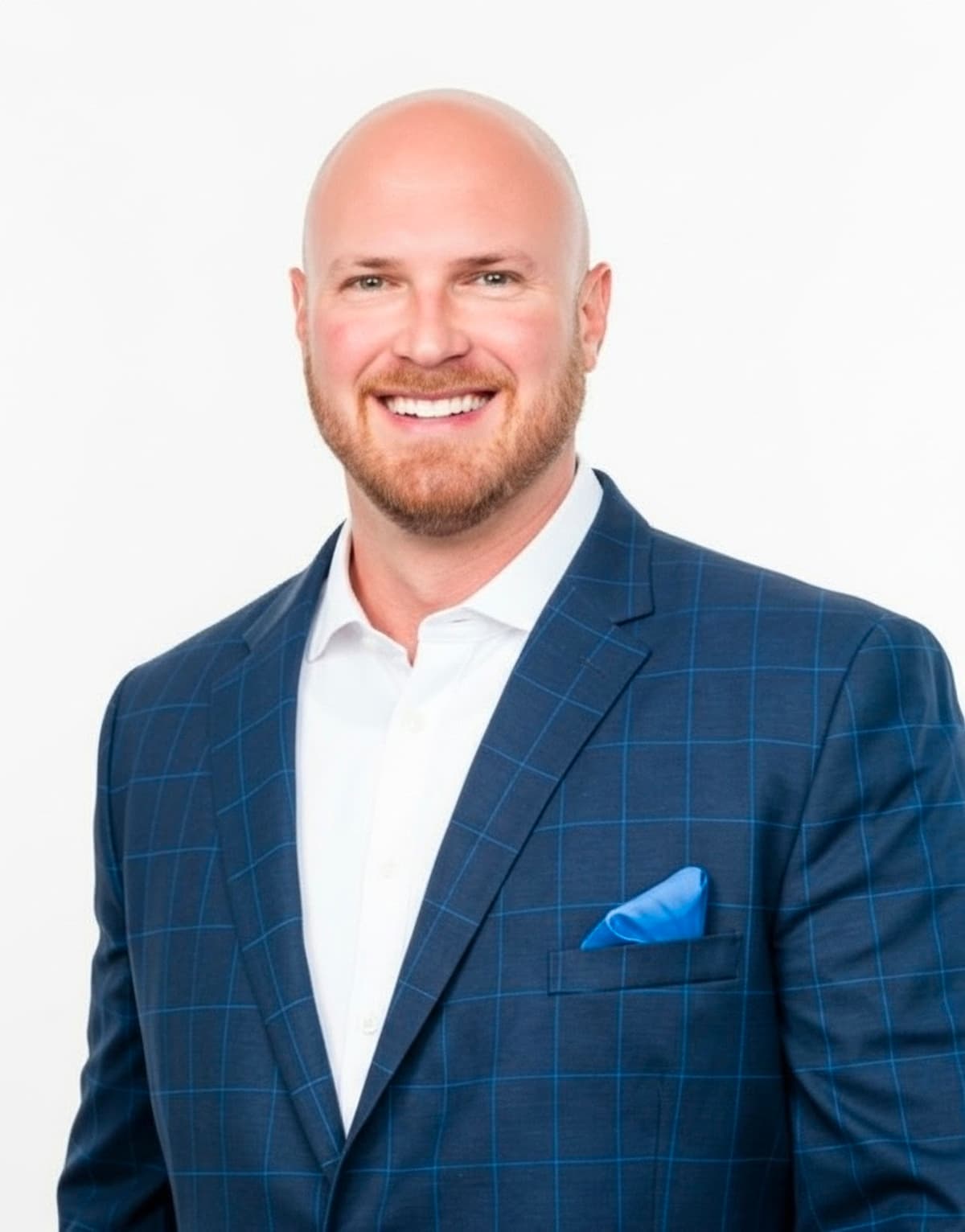
Brad Strawbridge
Founder & CEO · Forbes Business Council Member • RT3 & NRAP Board of Directors • GAF Master Elite® • CertainTeed ShingleMaster™ • NRCA Residential & Workforce Development Committees
Brad Strawbridge is the Founder and CEO of Capital City Roofing, bringing over a decade of hands-on expertise to the industry. He is an official member of the Forbes Business Council, the invitation-only community for vetted senior-level business leaders, and serves on the Boards of Directors of the Roofing Technology Think Tank (RT3) and the National Roofing Apprenticeship Program (NRAP). A member of the National Roofing Contractors Association (NRCA), Brad has been appointed to the NRCA Residential Roofing Committee and the NRCA Workforce Development Committee, helping set national standards for installation quality and the future of the roofing labor force. Under his leadership, Capital City Roofing has earned GAF Master Elite and CertainTeed ShingleMaster Premier, the top contractor credential from each manufacturer.