Loading Capital City Roofing...

Compare the six most common commercial roofing systems side-by-side. Find the right fit for your building type, climate, and budget.
Unlike residential roofing — where asphalt shingles dominate — commercial roofing offers six distinct system categories, each with unique strengths and trade-offs. The right choice depends on your building's slope, foot traffic, chemical exposure, budget, and long-term plans.
Below, we compare each system with real-world cost data, expected lifespans, and honest pros/cons to help you make an informed decision.

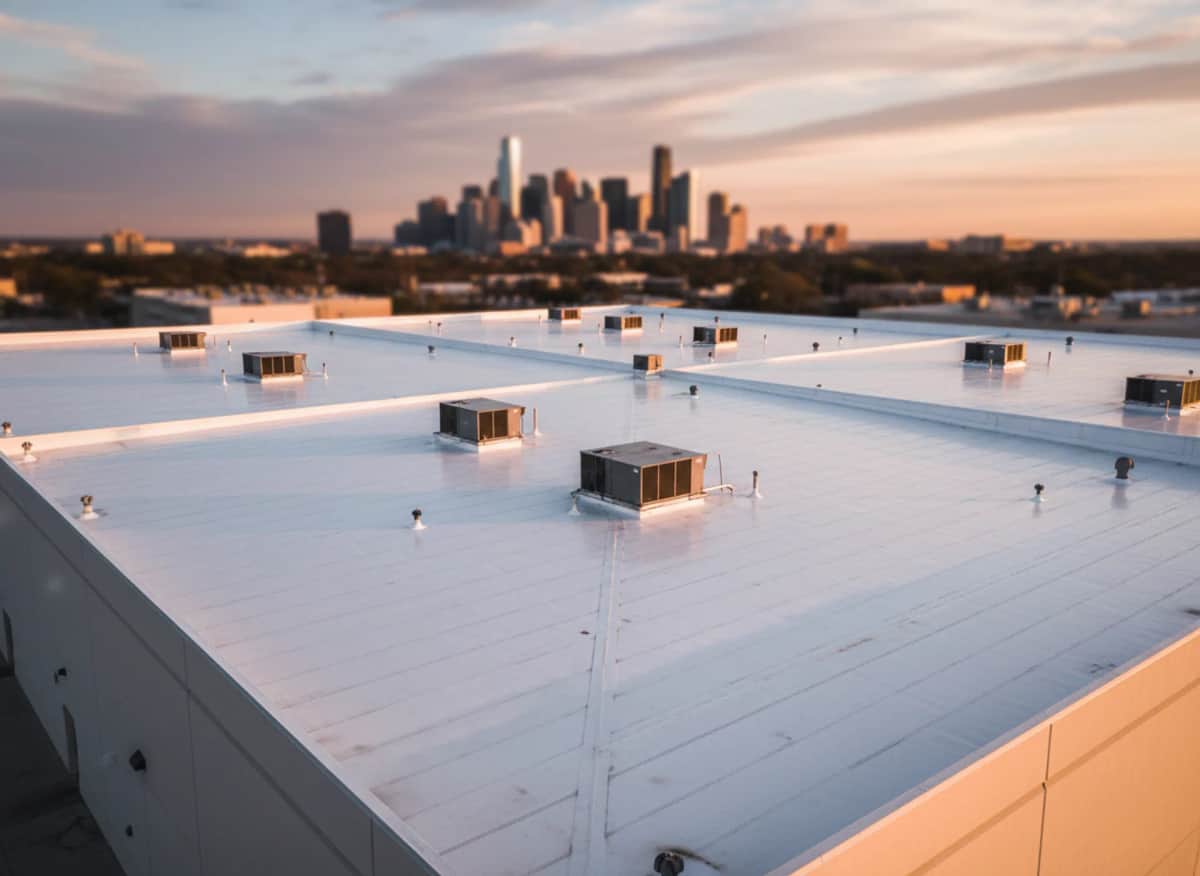
TPO is a single-ply white membrane that dominates the commercial roofing market. Its reflective surface reduces cooling costs by up to 30%, and heat-welded seams create monolithic waterproofing. TPO works well in Georgia's hot climate and is the go-to choice for new commercial construction.
Best for: Most commercial flat roofs, energy-conscious building owners

EPDM is the 'rubber roof' that has been a commercial staple since the 1960s. Available in black or white, it's the most cost-effective single-ply membrane. While its dark surface absorbs more heat than TPO, white EPDM options provide improved energy efficiency. EPDM excels on buildings with minimal foot traffic and straightforward layouts.
Best for: Budget-conscious flat roofs, buildings with low foot traffic

PVC membrane is similar to TPO but with added plasticizers that provide superior resistance to chemicals, grease, and oils. This makes it the preferred choice for restaurants, food processing facilities, and buildings with rooftop kitchen exhaust. PVC's heat-welded seams and chemical resistance justify its higher price in these applications.
Best for: Restaurants, kitchens, chemical processing — anywhere with grease/chemical exposure

Modified bitumen is an evolved version of traditional built-up roofing. Applied in rolls using torch, cold adhesive, or self-adhesion, it provides excellent waterproofing and puncture resistance. Its multi-layer construction handles foot traffic from HVAC technicians and maintenance crews better than single-ply membranes.
Best for: Small commercial buildings, areas with high foot traffic

The original 'flat roof' system, BUR consists of alternating layers of bitumen (asphalt or tar) and reinforcing fabrics, topped with gravel or a cap sheet. With over a century of proven performance, BUR provides the most redundant waterproofing of any commercial system. Its weight and installation process make it best suited for new construction or full replacements.
Best for: Large commercial buildings seeking proven, heavy-duty waterproofing

Standing seam metal roofing features interlocking panels with concealed fasteners, creating a sleek, modern appearance with exceptional longevity. While the upfront cost is highest, the 40–60 year lifespan and minimal maintenance requirements often make metal the most cost-effective system over time. Ideal for mixed-use commercial buildings where aesthetics and longevity matter.
Best for: Long-term investment, buildings with sloped sections, architectural aesthetics
| System | Cost/sq ft | Lifespan | Energy | Maintenance |
|---|---|---|---|---|
| TPO | $5–$10 | 20–30 yrs | ★★★★★ | Low |
| EPDM | $4–$8 | 20–25 yrs | ★★★☆☆ | Low |
| PVC | $6–$12 | 25–30 yrs | ★★★★★ | Low |
| Mod. Bitumen | $4–$8 | 15–20 yrs | ★★☆☆☆ | Medium |
| BUR | $5.50–$9 | 20–30 yrs | ★★★☆☆ | Medium |
| Metal | $8–$16 | 40–60 yrs | ★★★★☆ | Very Low |

Capital City Roofing provides expert evaluations for every commercial roofing system. Get a free assessment and customized recommendation.