Capital City Roofing
Flat commercial roof maintenance
Flat Roof Care

Flat Roof Maintenance & Repair

Flat and low-slope roofs demand specialized maintenance. Learn ponding prevention, membrane care, and when repairs save money vs. full replacement.

🏠 HomeResourcesFlat Roof Maintenance

Why Flat Roofs Need More Attention

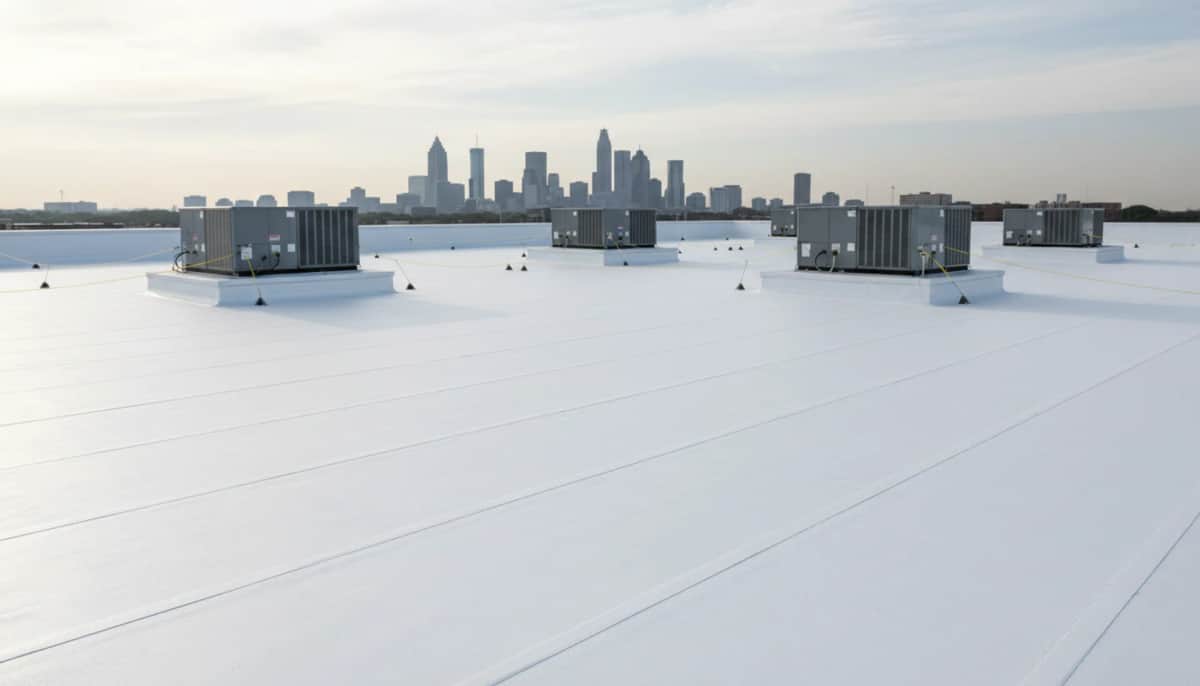
Flat and low-slope roofs (those with a pitch less than 2:12) don't shed water as readily as steep-slope roofs. Water pools in low spots, debris accumulates without sliding off, and the membrane is directly exposed to foot traffic from HVAC technicians, window washers, and maintenance crews.

The good news: with a consistent maintenance program, flat roofs can meet or exceed their expected lifespan. Neglect, however, is punishing — a small drain blockage can lead to ponding, which leads to membrane degradation, which leads to leaks, which leads to saturated insulation and a $100K+ replacement bill.

Monthly Checks

Inspect drains, scuppers, and gutters for debris blockageCritical
Check for ponding water after rainfallCritical
Walk the roof perimeter looking for edge flashing issues
Verify HVAC equipment bases are secure and not damaging the membrane

Quarterly Maintenance

Clear all drains, scuppers, and overflow outlets of debrisCritical
Inspect membrane seams for separation or liftingCritical
Check flashing at walls, curbs, and penetrationsCritical
Remove any organic growth (moss, algae, weeds)
Inspect walkway pads for damage or displacement

Bi-Annual Professional Inspection

Core sample testing to check for moisture in insulationCritical
Infrared scan for hidden moisture (recommended)
Seam integrity testing on single-ply membranesCritical
Verify roof slope and drainage adequacy
Document overall membrane condition with photosCritical
Generate maintenance report with recommended actions

Repair vs. Replace Decision Guide

Localized punctures or tears (< 5% of surface)

Repair

Patch with matching membrane material. Cost: $200–$800 per repair.

Seam separations in isolated areas

Repair

Re-weld (TPO/PVC) or re-adhere (EPDM) affected seams. Cost: $300–$1,200.

Ponding in one or two areas

Repair

Install tapered insulation or additional drains to redirect water. Cost: $1,000–$5,000.

Widespread membrane deterioration or cracking

Replace

Full replacement is more cost-effective than patching dozens of failures.

Wet or saturated insulation (confirmed by core cuts)

Replace

Wet insulation has zero R-value and promotes mold. Cannot be dried in-place.

Roof is within 3 years of expected lifespan end

Replace or Coat

Consider full replacement or a restoration coating to extend life 10–15 years.

Common Flat Roof Mistakes to Avoid

Ignoring ponding water

Address drainage issues immediately. Water weighing 5 lbs/sq ft adds thousands of pounds to your structure.

Using non-compatible sealants or patches

Always match repair materials to the existing membrane type. TPO patches on EPDM (or vice versa) will fail.

Allowing HVAC contractors to damage the membrane

Require walkway pads and equipment pads. Add contract language making HVAC vendors responsible for membrane damage.

Deferring drain cleaning

Clogged drains are the #1 cause of flat roof failures. Clean monthly during leaf season, quarterly otherwise.

Coating a roof with saturated insulation

Coatings seal moisture in. Always core-test before coating to confirm insulation is dry.

Flat Roof Questions

How often should a flat roof be inspected?
Flat and low-slope roofs should be professionally inspected at least twice per year — spring and fall — plus after any significant storm event. Between inspections, building maintenance staff should perform monthly visual checks of drains, flashings, and membrane condition. Flat roofs are more vulnerable to damage from foot traffic, HVAC servicing, and ponding water than sloped roofs.
What causes ponding on flat roofs?
Ponding occurs when water remains on the roof surface 48+ hours after rainfall. Common causes include: clogged drains or scuppers, inadequate roof slope (less than 1/4 inch per foot), structural settling or deflection, debris accumulation, and HVAC equipment blocking drainage paths. Ponding accelerates membrane deterioration, adds dangerous weight, and can lead to catastrophic failure if not addressed.
Can I walk on my flat roof?
Yes, but with precautions. Single-ply membranes (TPO, EPDM, PVC) can be damaged by sharp objects, heavy equipment, and excessive foot traffic. Use designated walkway pads in high-traffic areas (near HVAC units, roof access points). Avoid walking on the roof during extreme heat (membranes soften) or extreme cold (membranes become brittle). Always wear soft-soled shoes — never boots with cleats or sharp heels.
Capital City Roofing Free Roof Inspection and Consultation in Atlanta GA

Need a Flat Roof Inspection?

Our commercial roofing specialists provide detailed flat roof condition assessments with actionable maintenance plans.