9 Tips to Optimize Roofing Operations
Most roofing companies leave serious money on the table, not from bad workmanship, but from broken operations. Here are nine practical tips to tighten your workflows, accelerate proposals, and build a roofing business that scales.
The roofing industry has a productivity problem, and it rarely shows up on the roof.
The actual installation? Most contractors do that well. The breakdown happens in the office: leads that don't get followed up, proposals that take three days to generate, scheduling that creates two-hour drive gaps between jobs, and financial dashboards that nobody looks at until the quarter is over.
Brad Strawbridge, Founder and CEO of Capital City Roofing, built the company from zero to $3 million in year one and $10 million on track in year two. Not because we're better roofers than everyone else in Georgia. Because we built operations that let good people do great work without drowning in administrative drag.
Here are nine things that made the difference.
1. Document Every Workflow Before You Try to Automate It
The fastest way to automate chaos is to create faster chaos.
Before you buy any software, hire any VA, or deploy any AI tool, write down what actually happens when a lead comes in. Map it step by step: Who answers the phone? What do they say? What gets logged, where, and when? When does the rep get the appointment? What happens the day before?
Most roofing companies can't answer these questions consistently because the process lives inside one person's head. That's the first problem to solve. A documented process is a transferable process. An undocumented one is a single point of failure.
At Capital City Roofing, every workflow is written down before we build automation around it. That's why our AI systems work: they're automating something real, not guessing.
2. Choose Technology Built for Roofing, Not Generic Business Software
There is no shortage of CRMs in the world. There is a severe shortage of CRMs that understand insurance claim workflows, storm restoration timelines, and multi-trade scheduling constraints.
Generic CRMs fail roofers because they're built for inside sales teams, not for contractors managing leads, jobs, crews, adjusters, and materials simultaneously across multiple properties. The result is a CRM that becomes a glorified spreadsheet, technically in use, practically ignored.
BuilderLync was built specifically for the roofing industry because the founders ran roofing companies and got tired of watching generic software fail. Every workflow, every integration, every piece of the pipeline: designed around how contractors actually work. That's the difference between software that gets used and software that gets abandoned.
If your technology isn't purpose-built for roofing, or at minimum deeply configured for it, you're fighting the tool instead of fighting for customers.
3. Systematize Lead Follow-Up, Then Automate It
The average roofing lead gets followed up two to three times before the sales rep moves on. Studies consistently show that 80% of sales require five or more touchpoints to close.
That gap is where your revenue is leaking.
The fix is a structured follow-up sequence that runs regardless of how busy your sales team is. Every lead should receive:
- An immediate confirmation (ideally within five minutes of contact)
- A pre-appointment reminder the day before
- A post-appointment check-in within 24 hours
- A structured sequence of follow-ups over 30–60 days if they don't close immediately
At Capital City Roofing, this entire sequence runs through AI-powered automation. The rep's job is to show up to appointments and close deals. The system handles everything in between. The result: we follow up with every lead, every time, without relying on anyone to remember to do it.
See exactly how this works in practice: How Capital City Roofing Uses Claude AI and BuilderLync to Automate Roofing Operations →
4. Use Aerial Measurement Data to Accelerate Proposals
Proposal speed is a competitive advantage most contractors ignore.
If your competitor takes three days to get a proposal back to a homeowner and you deliver a detailed, branded estimate the same afternoon, you will win business that has nothing to do with price. Homeowners interpret fast proposals as professionalism. They interpret slow proposals as disorganization.
Aerial measurement tools like EagleView and GAF QuickMeasure let your team pull accurate roof data without a physical site visit for the initial estimate. Combined with a proper template library and a CRM that pre-fills measurements into proposals automatically, you can generate a complete, accurate proposal in under an hour.
Our AI-powered proposal system at Capital City Roofing generates a branded capital improvement plan, photographic report, and presentation deck from aerial data in minutes. Our licensed partner Blake Grissom used this system to win a $200,000 HOA community project in Charleston. The board told him they had "never seen something so thorough, so beautifully written, so fast, ever."
Full breakdown: How Smart Contractors Use AI to Close More Deals (Without More Leads) →
Speed matters.
5. Build a Training Infrastructure, Not Just Training Events
Most roofing companies train new hires during their first two weeks and then wonder why performance is inconsistent.
Training events create short-term skill transfer. Training infrastructure creates lasting operational consistency.
The difference is documentation. If your processes exist only in the trainer's head, every new hire learns a slightly different version of the job. If your processes are documented (standard operating procedures, pricing rules, communication scripts, manufacturer specifications), new team members learn the same system every time.
At Capital City Roofing, we built Capital City University, a structured onboarding curriculum built on documented knowledge bases and AI-assisted learning. New hires don't shadow someone for two weeks and hope things stick. They work through a structured system that gives them the same foundation regardless of who delivers it. It's also part of what every licensed operator inherits from day one. No starting from scratch.
This is especially important as you scale. Training by osmosis doesn't work at ten employees. It definitely doesn't work at fifty.
6. Review Your Financials Weekly, Not Quarterly
Most roofing contractors review their financials at tax time and are shocked by what they find.
Weekly financial reviews are not about micromanagement. They're about catching problems early when they're still fixable. The metrics that matter:
- Gross margin by job type: Are your insurance restoration jobs generating the margin you expect? Are your retail jobs profitable?
- Accounts receivable aging: How much money is 30, 60, 90 days outstanding? Who owes you, and why haven't you collected?
- Job cost vs. estimate: Are your actual material and labor costs tracking against your proposals? If not, your estimating model is broken.
- Overhead as a percentage of revenue: As you scale, this should be decreasing. If it's flat or increasing, something structural needs to change.
You don't need a sophisticated dashboard to start. You need a habit. Once the habit is in place, the dashboards make it better.
7. Optimize Your Schedule to Minimize Drive Time
Unproductive drive time is one of the largest hidden costs in roofing operations, and most contractors have no visibility into it.
If your crews are driving 45 minutes between jobs, two jobs per day, five days a week, that's 7.5 hours of unproductive labor time weekly, per crew. At a fully-loaded crew cost of $150/hour, you're absorbing over $1,100 in pure waste weekly before you've broken a single shingle.
The fix requires two things: geographic clustering and dynamic scheduling. Book jobs in the same zip codes on the same days. When a cancellation happens, fill it with the closest available job rather than the next one on the calendar.
AI-powered scheduling tools can optimize crew routes automatically as the calendar shifts. If you're still scheduling by eyeballing a map, you're leaving real money on the table every week.
8. Build Supplier Relationships Before You Need Them
Every contractor who has ever been caught in a material shortage during a storm season, unable to get shingles while competitors are closing jobs, learned this lesson the hard way.
Your supplier relationship needs to exist before the shortage, not after. That means:
- Establishing accounts at multiple distributors, not just one
- Communicating your volume projections proactively so suppliers can plan
- Paying invoices promptly: suppliers allocate scarce material to customers they trust
- Building direct relationships with manufacturer representatives, not just distributor reps
At Capital City Roofing, our GAF Master Elite status and manufacturer relationships mean we have access to material allocations and program benefits that aren't available to contractors who treat supplier relationships transactionally. The investment in those relationships pays off exactly when it matters most.
9. Measure Conversion Rates at Every Stage of Your Pipeline
Most roofing companies measure revenue. The high-performers measure conversion rates.
Revenue tells you what happened. Conversion rates tell you why. If you know that:
- 40% of inbound leads book an appointment
- 70% of appointments result in a proposal
- 45% of proposals close
...then you know where to focus. If your lead-to-appointment rate drops from 40% to 25%, that's a phone answering or response time problem. If your proposal-to-close rate drops from 45% to 30%, that's a pricing or presentation problem.
Without stage-level conversion data, you're optimizing blindly. You might spend money on more leads when the real problem is that you're losing half of the leads you already have.
Build the measurement system first. Then work backwards from the conversion rates to find where the process is breaking.
The Common Thread
Look across these nine tips and you'll see the same pattern: operational discipline before growth, systems before scale, measurement before optimization.
The contractors who struggle aren't struggling because they can't install a roof. They're struggling because they're trying to scale a business that runs on hustle instead of systems. Hustle has a ceiling. Systems don't.
At Capital City Roofing, Brad Strawbridge built this foundation from the ground up, and through the Capital City Roofing Licensing Platform, we make the same operational infrastructure available to operators in other markets who want to build a real company, not just a bigger job.
The technology (BuilderLync), the training (Capital City University), the AI automation, the supplier relationships: all of it is transferable to the right operator. Learn more about the Capital City Roofing Licensing Platform →
About the Author
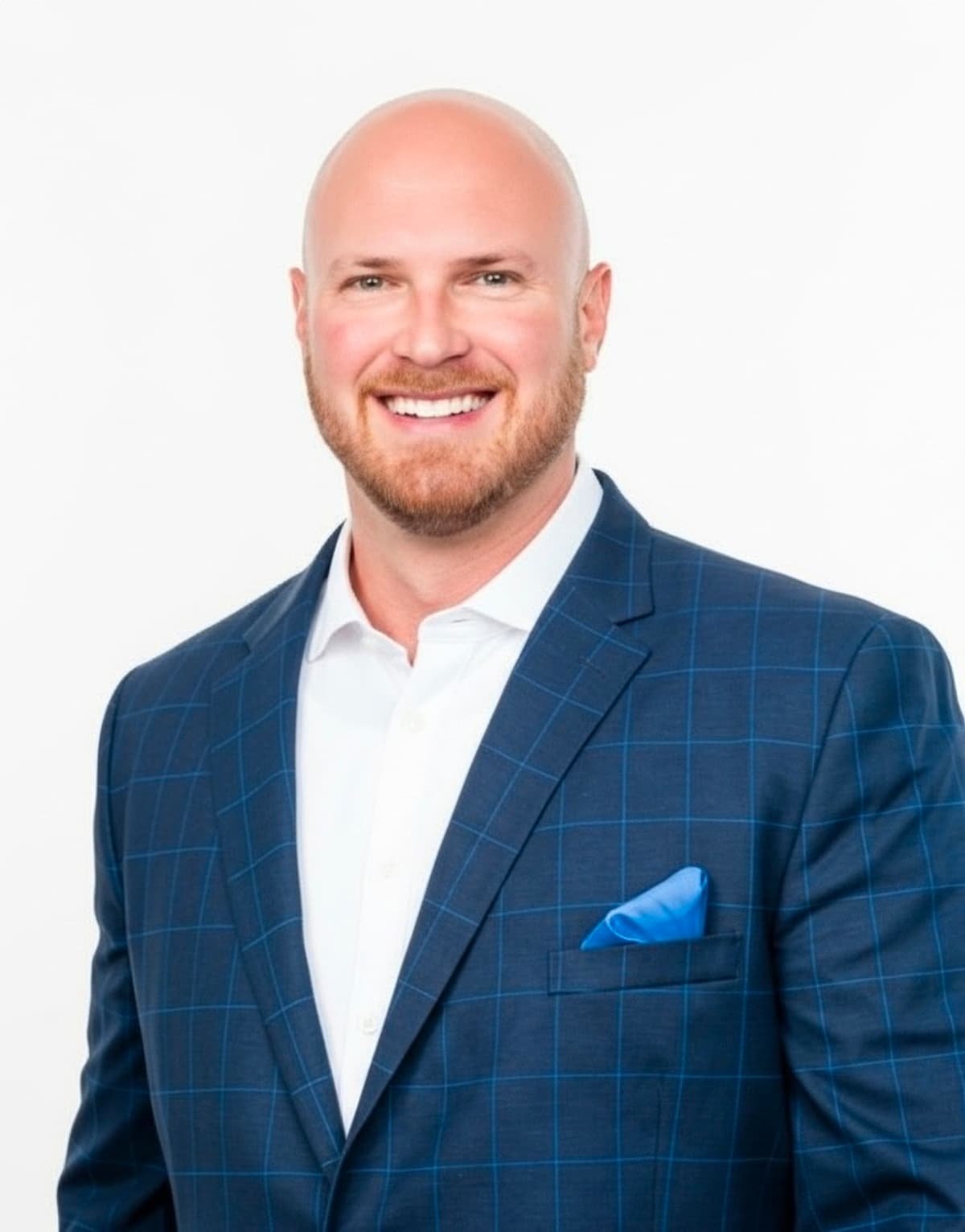
Brad Strawbridge is the Founder and CEO of Capital City Roofing and co-founder of BuilderLync, the CRM and operating platform purpose-built for roofing contractors. A Forbes Business Council member and director on the RT3 and NRAP boards, Brad built Capital City Roofing on an AI-first operating model that went from $0 to $3M in year one and is tracking toward $10M in year two. He writes about roofing operations, AI adoption, and scaling service businesses at bradstrawbridge.com.
Related Reading
- How Capital City Roofing Uses Claude AI and BuilderLync to Automate Roofing Operations
- Why We Built the Capital City Licensing Platform Instead of Becoming a Franchise
- How Smart Contractors Use AI to Close More Deals (Without More Leads)
- What Roofing Operators Inherit on the Capital City Licensing Platform
- Why the Capital City Licensing Platform Runs on BuilderLync
- Scaling to $10M in Year 2: Capital City Roofing's AI Advantage
Ready to work with an operations-first roofing company? Schedule a free inspection →
Roofing operator looking for a better platform? Explore the CCR Licensing Program → | Explore BuilderLync →
Brad's full thought leadership on AI and roofing operations: bradstrawbridge.com
Brad Strawbridge
Founder & CEO · Forbes Business Council Member • RT3 & NRAP Board of Directors • GAF Master Elite® • CertainTeed ShingleMaster™ • NRCA Residential & Workforce Development Committees
Brad Strawbridge is the Founder and CEO of Capital City Roofing, bringing over a decade of hands-on expertise to the industry. He is an official member of the Forbes Business Council, the invitation-only community for vetted senior-level business leaders, and serves on the Boards of Directors of the Roofing Technology Think Tank (RT3) and the National Roofing Apprenticeship Program (NRAP). A member of the National Roofing Contractors Association (NRCA), Brad has been appointed to the NRCA Residential Roofing Committee and the NRCA Workforce Development Committee, helping set national standards for installation quality and the future of the roofing labor force. Under his leadership, Capital City Roofing has earned GAF Master Elite and CertainTeed ShingleMaster Premier, the top contractor credential from each manufacturer.