How Capital City Roofing Uses Claude AI and BuilderLync to Automate Roofing Operations From Day One
A deep dive into how Brad Strawbridge built Capital City Roofing's AI-first operating system using Claude, BuilderLync CRM, and structured knowledge bases - and how the CCR licensing platform gives other contractors the same advantage from day one.
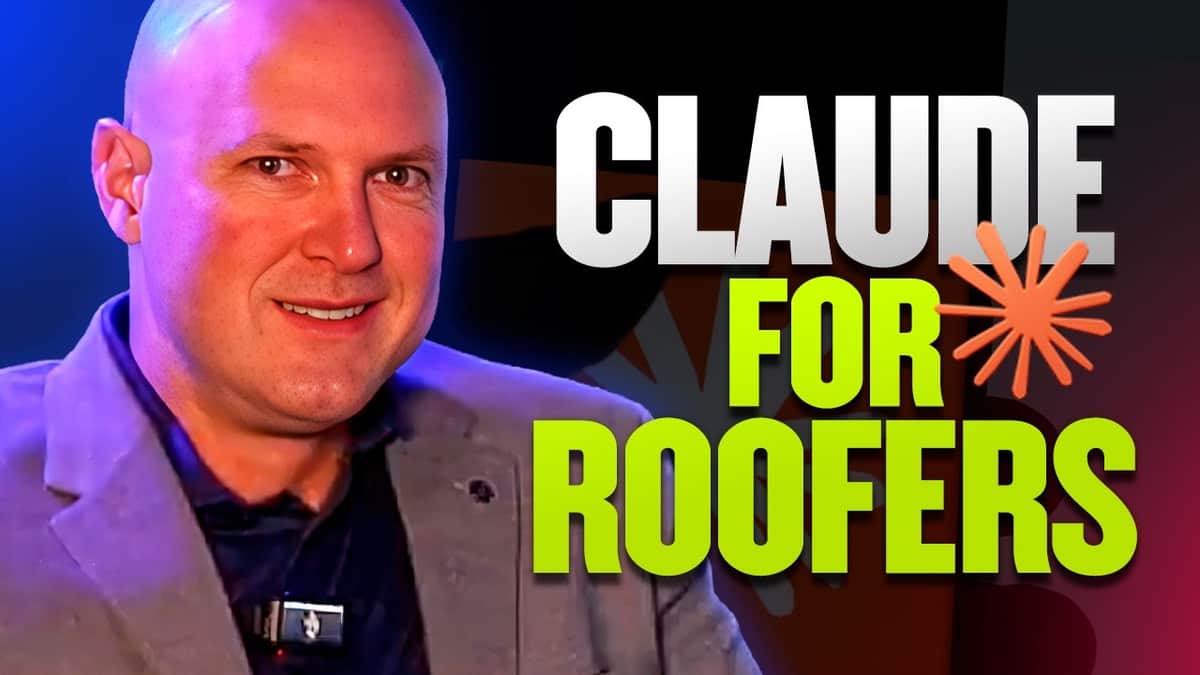
This article is a companion deep dive to Brad Strawbridge's appearance on the Hook Better Leads podcast with Tim Brown, where he demonstrates the exact Claude AI workflows powering Capital City Roofing.
The roofing industry is at an inflection point. While most contractors are still debating whether to adopt AI, Capital City Roofing has already built its entire operation around it - and the results speak for themselves: $3 million in year one, $10 million on track in year two, and a licensing platform expanding into new markets across the Southeast.
In a recent appearance on the Hook Better Leads podcast, CCR founder Brad Strawbridge pulled back the curtain on how the company uses Claude AI as its primary operational engine. This article breaks down the key systems, the philosophy behind them, and what they mean for the future of the roofing industry.
The AI-First Architecture: Why Starting From Scratch Is an Advantage
Most roofing companies that try to adopt AI face the same problem: they're bolting new technology onto old, broken processes. As Brad explains in the podcast, this is why 95% of AI implementations fail - the operational foundation is fractured before the AI ever touches it.
Capital City Roofing never had this problem because the company was built on an AI-first architecture from day one. Every workflow - from lead intake to proposal delivery to post-installation follow-up - was designed with AI automation in mind before the first shingle was installed.
This isn't just a technology decision. It's a strategic moat. A competitor can't replicate this by buying a software subscription. They'd need to rebuild their entire operation from the ground up.
Claude Co-Work: The Workflow Engine
The specific tool Brad demonstrates on the podcast is Claude's Co-Work feature. Unlike traditional chatbot interactions where you type a prompt and get a response, Co-Work allows you to:
- Record a workflow - Perform a task (creating a proposal, updating a CRM record, dispatching a rep) while the AI watches and learns the sequence
- Save it as a reusable process - The AI converts your actions into a repeatable workflow
- Trigger it on command or on schedule - Execute the workflow with a simple command, or set it to run automatically based on triggers
Real-World Application: Proposal Generation
Here's how this works in practice at Capital City Roofing:
A sales rep flies a drone over a property and uploads the data to a shared folder. The AI system:
- Pulls the measurements and imagery
- Cross-references pricing from the company's material database
- Generates a branded capital improvement plan
- Produces a photographic report with annotations
- Assembles a presentation-ready deck
The rep's job? Review it, make adjustments, and present it to the customer. The administrative work that would normally consume 3-4 hours is done in minutes.
This exact system helped CCR licensing partner Blake Grissom win a $200,000 HOA community job in Charleston - the board said they had "never seen something so thorough, so beautifully written, so fast, ever."
The Context Layer: Why Capital City Roofing's AI Outperforms Generic Tools
Brad's most important insight from the podcast isn't about which AI model to use. It's about context.
"Give it a ridiculous amount of context before you ask for anything."
At Capital City Roofing, every piece of institutional knowledge is structured and accessible to AI agents:
- Standard Operating Procedures - Every process documented and available
- Pricing databases - Current material costs, labor rates, and margin targets
- Manufacturer specifications - GAF, CertainTeed, and all partner manufacturer details
- Customer communication scripts - Brand-consistent language for every touchpoint
- Training curriculum - The full Capital City University knowledge base
This context layer is built using NotebookLM as a structured knowledge base. When AI agents prompt against this system, they don't hallucinate or generate generic responses. They produce output that is specific, accurate, and consistent with how Capital City Roofing actually operates.
This is what separates an AI-powered roofing company from a roofing company that uses AI tools. The difference is architectural.
BuilderLync: The CRM Built for This
The conversation naturally flows into BuilderLync - the AI-powered CRM and operating system that Brad co-founded because nothing on the market was built for how contractors actually work.
Why Generic CRMs Fail Roofers
Most CRMs are built for generic sales teams. They don't understand:
- Insurance claim workflows - The back-and-forth with adjusters, supplemental documentation, Xactimate formatting
- Storm damage timelines - The urgency of emergency tarping versus the patience required for insurance restoration
- Multi-trade coordination - Subcontractor scheduling, material staging, and phased installation on occupied properties
- Seasonal demand spikes - The operational scaling required after a hail event or hurricane
BuilderLync was designed from the inside out to handle all of these scenarios because it was built by people who run roofing companies every day.
What BuilderLync Delivers
| Capability | How It Works |
|---|---|
| Lead Management | AI-powered intake with instant response, territory routing, and automated follow-up sequences |
| Estimating | Integrated with EagleView and aerial measurement tools for accurate, fast proposals |
| Crew Dispatching | Intelligent scheduling based on location, availability, and skill requirements |
| Insurance Claims | Xactimate-ready documentation, supplement tracking, and adjuster communication tools |
| Financial Management | Invoicing, payment collection, and bookkeeping in one platform |
| Analytics | Real-time dashboards showing pipeline health, conversion rates, and team performance |
BuilderLync isn't exclusive to Capital City Roofing. Any contractor looking for a CRM that was purpose-built for the trades can learn more at builderlync.com.
The Licensing Platform: Giving Every Contractor an AI-First Launch
Perhaps the most significant implication of Capital City Roofing's AI-first architecture is what it makes possible for other contractors through the CCR licensing platform.
Traditional roofing franchises charge six-figure entry fees and deliver a brand and a manual. Capital City Roofing's licensing model delivers the entire operating system - the same AI-powered infrastructure that took CCR from zero to $10M.
What Licensed Partners Receive
- The Capital City Roofing brand - recognized across the Southeast for quality and integrity
- BuilderLync CRM access - the full platform, pre-configured for roofing workflows
- Capital City University - structured training built on the AI-driven knowledge systems Brad describes in the podcast
- Back-office support - phone answering, appointment booking, material ordering, warranty filing, bookkeeping, and compliance
- AI workflow templates - the same Claude-powered automation tools CCR uses internally
The economics are equally differentiated:
| Traditional Franchise | CCR Licensing | |
|---|---|---|
| Entry Fee | $100,000+ | $15,000 |
| Royalty | Uncapped percentage | 5% capped |
| Contract | Multi-year lock-in | 1-year auto-renewing |
| Technology | Buy your own | Included (BuilderLync) |
| Training | Manual + onboarding week | Ongoing (Capital City University) |
Licensed partners are already operating in Nashville and Charleston, with Greenville and Austin in the pipeline. Learn more at capitalcityroofing.net/licensing.
The Five-Year Outlook: Why This Matters Now
Brad's prediction on the podcast is straightforward: within five years, roofing contractors who haven't adopted AI-powered operations will be at a severe competitive disadvantage.
Not because AI replaces craftsmen. Because it eliminates the administrative drag that prevents good roofers from scaling. The contractor who can generate a proposal in 10 minutes while their competitor takes 3 days will win every time. The company that follows up with every lead at 11 PM will close deals the company that relies on a dispatcher never touches.
The contractors who build this foundation now - whether on their own or through a platform like the CCR licensing model - will own their markets.
Feeding the Future: The Mission Behind the Machine
Technology is a multiplier. But a multiplier only matters if it's pointed at something worth multiplying.
Capital City Roofing's mission goes beyond revenue. The Feeding the Future Project - the 501(c)(3) nonprofit Brad founded - receives a portion of every roof the company replaces. The goal: feed one million children in ten years.
Every AI workflow Brad builds, every licensing partner who launches, every efficiency gained - it all feeds back into that mission. That's not a marketing angle. It's the architecture of a company built on purpose.
Watch the Full Podcast
Want to see Brad demonstrate these systems in real time? Watch the Hook Better Leads episode →
Related Reading
- How AI-Powered Roof Replacement Improves Speed and Transparency - The customer-side result documented in Roofing Contractor's July technology cover story
- How Smart Contractors Use AI to Close More Deals (Without More Leads) - The $200K job proof point
- Why We Built AI Into Our Operations From Day One - CCR vs. legacy contractors retrofitting AI
- Inside the Playbook: Zero to $10M with AI, Licensing, and Operational Discipline - The full operating system breakdown
- Stop Competing on Claims: Why Operational Positioning Wins - Building constraints competitors can't copy
Ready to work with an AI-first roofing company? Schedule a free inspection →
Contractor interested in the CCR platform? Explore licensing → | Try BuilderLync →
Learn more about Brad Strawbridge's approach to AI and business: bradstrawbridge.com
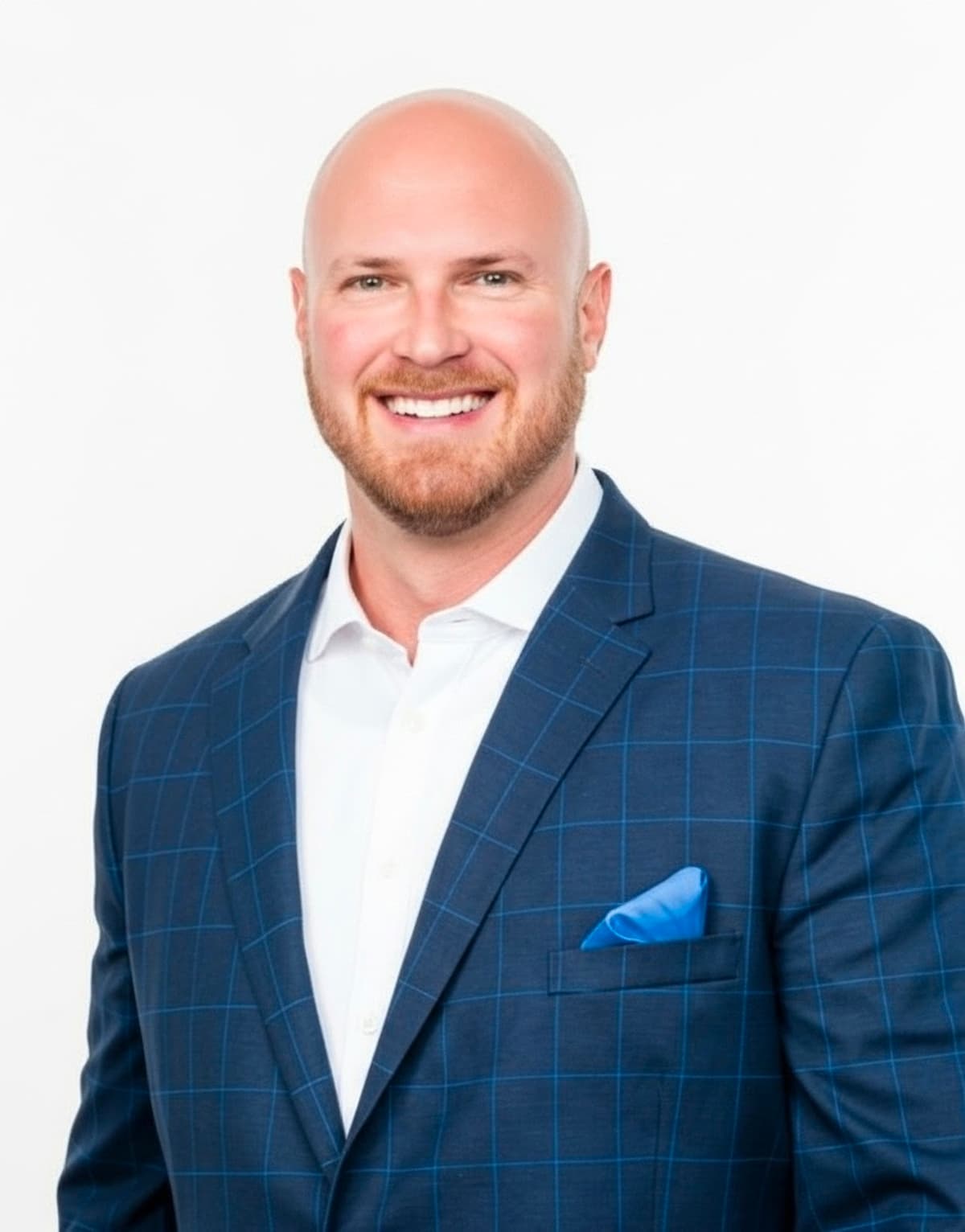
Brad Strawbridge
Founder & CEO · Forbes Business Council Member • RT3 & NRAP Board of Directors • GAF Master Elite® • CertainTeed ShingleMaster™ • NRCA Residential & Workforce Development Committees
Brad Strawbridge is the Founder and CEO of Capital City Roofing, bringing over a decade of hands-on expertise to the industry. He is an official member of the Forbes Business Council, the invitation-only community for vetted senior-level business leaders, and serves on the Boards of Directors of the Roofing Technology Think Tank (RT3) and the National Roofing Apprenticeship Program (NRAP). A member of the National Roofing Contractors Association (NRCA), Brad has been appointed to the NRCA Residential Roofing Committee and the NRCA Workforce Development Committee, helping set national standards for installation quality and the future of the roofing labor force. Under his leadership, Capital City Roofing has achieved elite certifications held by fewer than 1% of contractors nationwide.