Nashville Roofing Guide: Commercial and Residential Solutions for Middle Tennessee

Nashville sits in the heart of Dixie Alley, facing tornado, hail, and severe thunderstorm threats from March through June. This guide covers commercial roofing for Nashville's booming healthcare and warehouse sectors, residential solutions for every neighborhood, and what property owners need to know about storm season.
Nashville is one of the fastest-growing cities in the Southeast, and that growth brings a roofing challenge most newcomers do not expect. Middle Tennessee sits in what meteorologists call Dixie Alley: the southern extension of the tornado corridor that stretches from the Gulf Coast into the Ohio Valley. This region produces severe thunderstorms, damaging hail, straight-line winds exceeding 70 mph, and tornadoes with a frequency that rivals the traditional Plains states.
If you own property in Nashville, whether it is a single-family home in Belle Meade or a 200,000 square foot warehouse along Murfreesboro Pike, your roof faces threats that demand more than standard specifications. This guide covers what every Nashville property owner needs to know about protecting their investment.
Nashville Storm Season: What Property Owners Need to Know
Middle Tennessee's severe weather season runs from March through June, with a secondary window in November. During peak season, the Nashville metro averages multiple severe thunderstorm warnings per month. Here is what drives the damage:
Tornado Corridor Exposure
Nashville is not immune to tornadoes. The March 2020 tornado outbreak struck East Nashville, Germantown, and the Donelson corridor, causing catastrophic damage to hundreds of homes and commercial structures. The 2023 and 2024 seasons brought additional tornado warnings across Davidson, Williamson, and Rutherford counties.
Tornado damage to roofs ranges from partial shingle loss on the outer edges of the damage path to complete structural failure at the core. Even properties outside the direct path experience significant wind damage from the associated supercell.
Supercell Hail
The same supercell thunderstorms that spawn tornadoes produce large hail. Nashville metro properties regularly face hailstones ranging from quarter-size (one inch) to golf ball-size (1.75 inches), with isolated events producing baseball-size hail (2.75 inches) that destroys any residential roofing system on contact.
Straight-Line Winds
Not every damaging wind event involves a tornado. Derecho events and severe thunderstorm downbursts can produce sustained winds of 60 to 80 mph across broad areas. These events strip shingles, damage flashing, and compromise commercial membrane attachment across entire neighborhoods.
The March Through June Window
The peak risk period for Nashville property owners runs from early March through late June. During this window, Capital City Roofing recommends completing any deferred roof maintenance, scheduling a professional inspection, and verifying that your insurance policy is current.
Commercial Roofing in Nashville
Nashville's commercial construction boom has produced millions of square feet of low-slope roofing across healthcare campuses, corporate office towers, warehouse and distribution centers, and hospitality properties. Every one of these buildings requires specialized commercial roofing systems engineered for Middle Tennessee's severe weather exposure.
Capital City Roofing's Tennessee commercial division provides hands-on project oversight for every Nashville commercial roof installation and maintenance program.
Healthcare and Institutional Campuses
Nashville is the healthcare capital of the United States, with HCA Healthcare, Vanderbilt University Medical Center (VUMC), and dozens of hospital systems headquartered or operating major facilities in the metro. These facilities have specific roofing requirements that exceed standard commercial specifications:
- Zero-leak tolerance: Hospital operating rooms, MRI suites, and patient care floors cannot tolerate any water intrusion. Redundant waterproofing layers and rigorous quality control are non-negotiable.
- Phased installation: Hospital campuses cannot shut down during roof replacement. Projects must be planned and executed in phases that maintain facility operations.
- FM Global compliance: Healthcare facilities typically require FM Global I-90 wind uplift ratings and UL Class A fire ratings on all roofing assemblies.
BNA Airport and Transportation Infrastructure
Nashville International Airport (BNA) is in the middle of a massive expansion that includes new terminal construction, concourse expansion, and support facility development. Airport roofing projects require strict security clearance coordination, FAA compliance, and materials that meet enhanced fire and wind performance standards.
Warehouse and Distribution Corridors
The corridors along Murfreesboro Pike, Briley Parkway, and the I-24/I-40 interchange concentrate Nashville's warehouse and logistics infrastructure. These large-footprint buildings (50,000 to 500,000+ square feet) require cost-effective membrane systems that resist hail impact, ponding water, and foot traffic from HVAC maintenance.
Commercial Membrane Systems for Nashville
Capital City Roofing installs three primary membrane systems for Nashville commercial properties:
- TPO (60-mil and 80-mil): The most popular commercial roofing choice in Nashville. Highly reflective white membrane reduces cooling costs during Tennessee's hot summers. Heat-welded seams create a monolithic barrier superior to taped alternatives. FM Global I-90 wind uplift certification standard.
- EPDM (90-mil): Synthetic rubber membrane with proven longevity in extreme temperature fluctuations. Nashville experiences temperature swings from single digits in winter to 100+ degrees in summer. EPDM handles this thermal cycling without cracking or degradation.
- PVC membrane: Premium choice for facilities that exhaust chemicals, grease, or oils. PVC's chemical resistance makes it the specification for commercial kitchens, manufacturing environments, and laboratory buildings.
All commercial installations include NDL (No Dollar Limit) warranty options, ASHRAE 90.1 energy code compliance, and documented FM Global specifications.
Residential Roofing Across Nashville's Neighborhoods
Nashville's residential landscape spans historic homes built in the 1800s to brand-new construction in the outer suburbs. Each neighborhood presents different roofing challenges:
Belle Meade and Green Hills
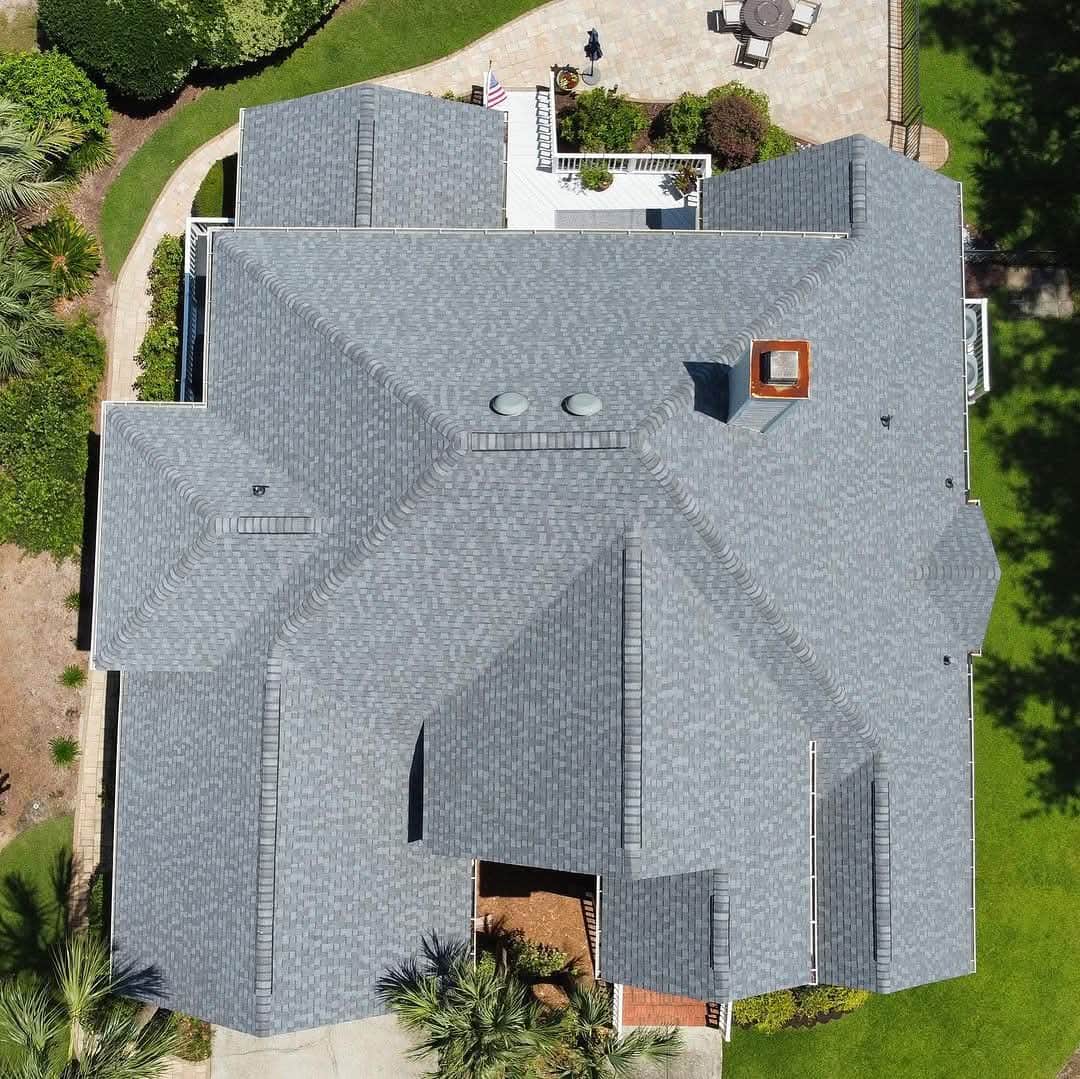
Nashville's most affluent residential neighborhoods feature large, complex roof lines with steep pitches, multiple dormers, and architectural details that require precision installation. Homeowners in these areas expect premium products and flawless aesthetics. Capital City Roofing installs GAF Timberline HDZ and CertainTeed Landmark PRO architectural shingles with enhanced underlayment and custom flashing details.
East Nashville and Germantown
The revitalized neighborhoods east of downtown feature a mix of restored Victorian homes and new construction. Many older homes have roof structures that require careful assessment for decking integrity and ventilation adequacy before re-roofing. Storm damage from the 2020 tornado path continues to drive replacement demand in these neighborhoods.
12 South and the Gulch
Mixed-use and residential properties in Nashville's trendy urban neighborhoods require contractors who can work in tight spaces, coordinate with neighboring properties, and deliver premium results on homes with contemporary and transitional architecture.
Brentwood and Franklin
The Williamson County suburbs south of Nashville feature high-value residential properties with large footprints. Homeowners in Brentwood and Franklin expect the highest level of product quality and installation craftsmanship.
Shingle Systems for Nashville Homes
Every residential roof we install in the Nashville market uses products rated for the region's severe weather:
- GAF Timberline HDZ: LayerLock technology with StrikeZone nailing area. 130-mph limited wind warranty. Class 4 impact-resistant option available (HDZ IR).
- CertainTeed Landmark PRO: Max Def color technology with NailTrak. Wind warranty coverage suitable for Nashville's wind zone.
- Class 4 Impact-Resistant Upgrades: For properties in high-risk hail zones, we recommend the GAF HDZ IR or CertainTeed Landmark IR. Many Tennessee insurers offer 10 to 25 percent premium discounts for Class 4 roofing.
Insurance Claims and Storm Damage in Nashville
When a storm damages your Nashville property, the insurance claim process is where the outcome is determined. Capital City Roofing's insurance claims coordination delivers results that protect our customers:
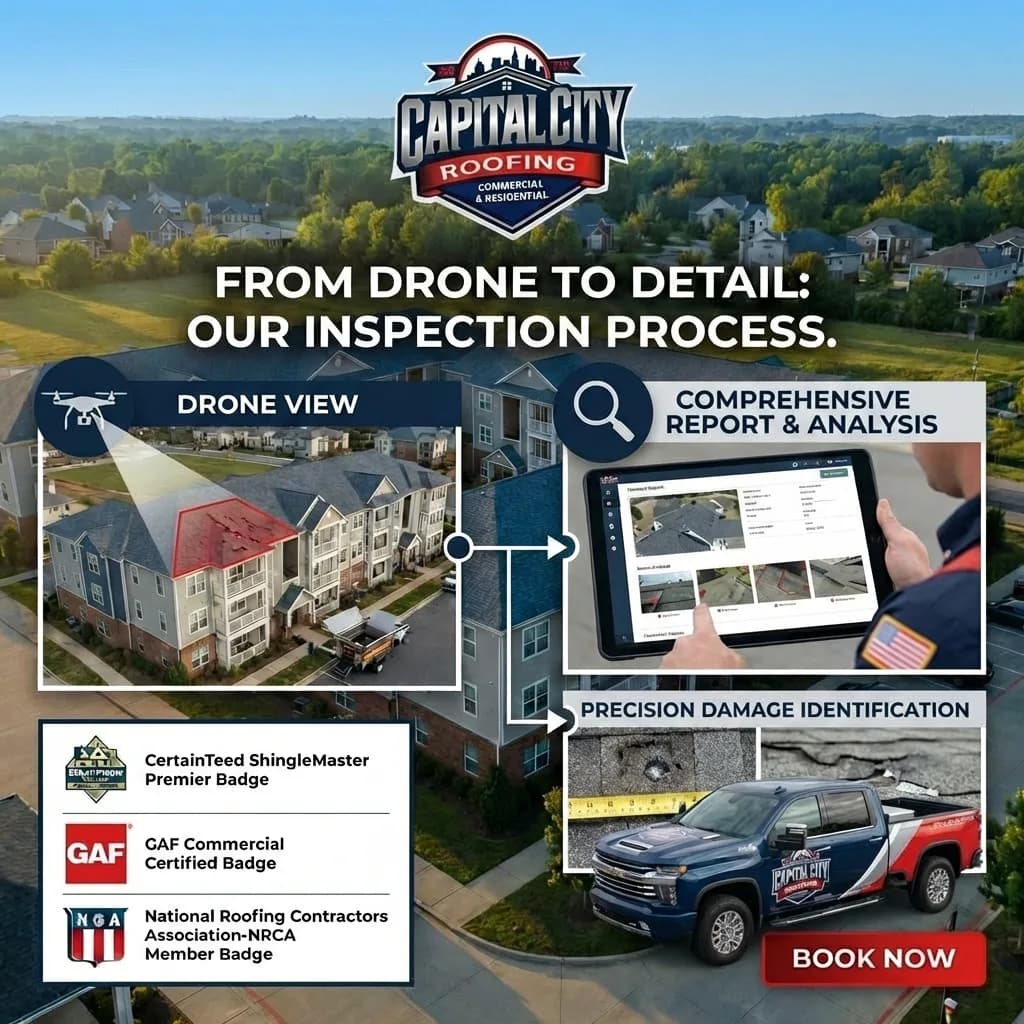
BuilderLync documentation: Our proprietary platform captures drone imagery, detailed damage measurements, and annotated photo reports that create an irrefutable claim package. This system is what we bring to every claim we assist with.
On-site adjuster meetings: We walk the roof with your insurance adjuster, reference the documentation, and ensure the full scope of damage is captured. Missing one damaged slope or one compromised flashing can cost thousands.
Supplemental claims: Damage discovered during tear-off (rotted decking, deteriorated underlayment, compromised ventilation) is documented and filed as a supplemental claim to ensure your settlement covers the actual repair scope.
Rapid response: After a major storm event, our Nashville team deploys within 24 to 48 hours for emergency tarping and damage assessment. For storm damage roofing needs, speed prevents secondary water damage that compounds the original loss.
Why Nashville Property Owners Choose Capital City Roofing
Capital City Roofing operates a permanent Tennessee division with dedicated local leadership, experienced crews, and a long-term investment in the Nashville market. We are not a transient storm-chasing operation.
Industry credentials:
- GAF Master Elite Contractor: top 1% of contractors nationwide
- CertainTeed ShingleMaster Premier: highest residential certification level
- GAF Commercial Certified: factory-trained commercial membrane installation
- GenFlex Commercial Certified: specialized single-ply membrane credentials
- NRCA Member: National Roofing Contractors Association membership
Technology-driven operations: Every Nashville project runs through BuilderLync, our proprietary CRM and operating platform. From the initial inspection to the final warranty activation, every step is documented, tracked, and quality-controlled.
Part of a larger system: Capital City Roofing's Nashville division operates on the same systems, standards, and operational architecture as our Atlanta flagship. The Capital City Licensing Platform ensures consistency across every market we serve.
Service areas: Beyond Nashville proper, our Tennessee team serves Dickson, Fairview, White Bluff, Burns, Charlotte, Ashland City, Gallatin, and communities throughout Middle Tennessee.
About the Author
Brad Strawbridge is the founder and CEO of Capital City Roofing and wrote nashville roofing guide commercial residential and co-founder of BuilderLync, the CRM and operating platform purpose-built for roofing contractors. A Forbes Business Council member and director on the RT3 and NRAP boards, Brad built Capital City Roofing on an AI-first operating model serving Greater Atlanta, Nashville, Charleston, and Greenville. He writes about roofing operations, AI adoption, and scaling service businesses at bradstrawbridge.com.
Related Reading
- Storm Season Roof Preparation Guide
- Understanding Hail Damage: A Homeowner's Complete Guide
- TPO vs EPDM vs PVC: Commercial Flat Roof Comparison
- How Your Roof Insurance Claim Actually Works
- Tornado Preparedness: Protecting Your Roof and Family
Nashville property owner ready to get ahead of storm season? Schedule a free inspection or reach out to our Tennessee team directly. Whether you need a commercial membrane assessment, a residential re-roof, or post-storm damage documentation, Capital City Roofing is your permanent partner for roofing excellence in Middle Tennessee.
Brad Strawbridge
Founder & CEO · Forbes Business Council Member • RT3 & NRAP Board of Directors • GAF Master Elite® • CertainTeed ShingleMaster™ • NRCA Residential & Workforce Development Committees
Brad Strawbridge is the Founder and CEO of Capital City Roofing, bringing over a decade of hands-on expertise to the industry. He is an official member of the Forbes Business Council, the invitation-only community for vetted senior-level business leaders, and serves on the Boards of Directors of the Roofing Technology Think Tank (RT3) and the National Roofing Apprenticeship Program (NRAP). A member of the National Roofing Contractors Association (NRCA), Brad has been appointed to the NRCA Residential Roofing Committee and the NRCA Workforce Development Committee, helping set national standards for installation quality and the future of the roofing labor force. Under his leadership, Capital City Roofing has earned GAF Master Elite and CertainTeed ShingleMaster Premier, the top contractor credential from each manufacturer.