Capital City Roofing
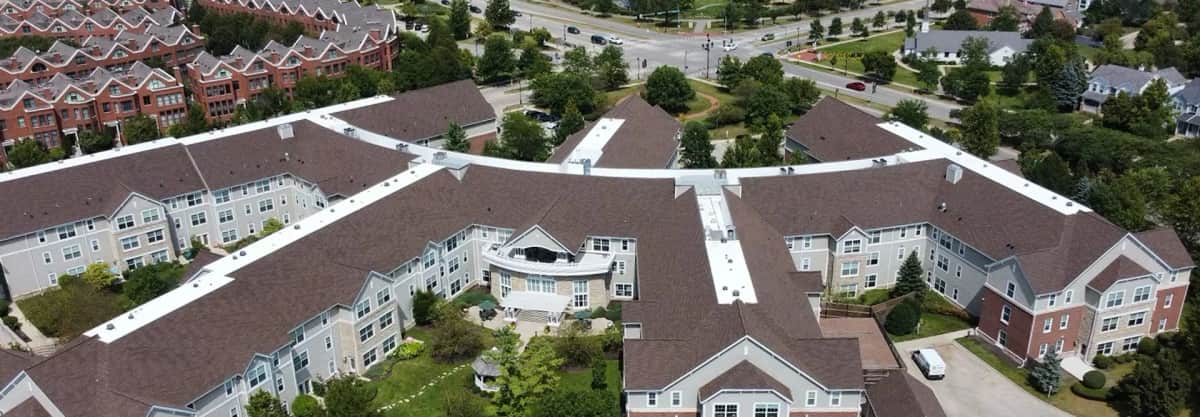
Multifamily apartment complex roofing
Property Management

Multifamily Roofing Management

Managing roofing across apartment complexes, condos, and HOA communities requires a strategic approach that balances tenant disruption, cost, and long-term ROI.

🏠 HomeResourcesMultifamily Roofing Guide

Why Multifamily Roofing Is Different

Unlike single-family homes, multifamily roofing projects affect dozens or hundreds of residents simultaneously. Property managers must coordinate tenant communication, vehicle relocation, construction timing, noise restrictions, and budget approval from ownership groups or HOA boards — all while ensuring the work meets manufacturer specifications for warranty compliance.

47%
Of multifamily properties have deferred roofing maintenance
$2.8K
Average per-unit roof replacement cost (architectural shingles)
15–20%
Increase in property value from new roofing

Our 4-Phase Multifamily Approach

Phase 1: Assessment & Prioritization

We inspect every building in your portfolio and create a prioritized replacement schedule based on roof condition, age, and risk of failure. This assessment includes detailed photo documentation, remaining lifespan estimates, and cost projections per building.

  • Individual building condition reports
  • Prioritized replacement timeline
  • Budget projections for each phase
  • Emergency vs. planned replacement identification

Phase 2: Budget & Financing Strategy

Based on the assessment, we work with property managers and HOA boards to develop a financial plan. Options include phased capital expenditures, reserve fund allocation, financing programs, or insurance claim assistance for storm-damaged buildings.

  • Multi-year CapEx budget planning
  • Reserve fund adequacy analysis
  • Financing options (12–60 month terms)
  • Insurance claim coordination if applicable

Phase 3: Staged Execution

We execute the replacement plan building-by-building, coordinating with property management on tenant notification, parking logistics, and access requirements. Each building is completed before moving to the next, minimizing the disruption footprint at any given time.

  • 72-hour advance tenant notification
  • Building-by-building completion
  • Clear walkways and safety barriers
  • Real-time progress updates via BuilderLync

Phase 4: Documentation & Warranty

Upon completion of each building, we provide comprehensive warranty documentation, maintenance guidelines, and a final condition report. Manufacturer warranties are registered individually for each building address to ensure full coverage.

  • Per-building warranty registration
  • Maintenance schedule and guidelines
  • Final inspection and photo documentation
  • 5-year workmanship warranty from Capital City Roofing

The ROI of Proactive Roof Management

Reactive Approach (Costly)

  • Emergency repairs at premium pricing
  • Interior water damage and mold remediation
  • Tenant complaints, turnover, and lease breaks
  • Insurance claim complications from neglect
  • Property value depreciation

Proactive Approach (Smart)

  • Planned replacements at competitive pricing
  • Zero interior damage from roof failures
  • Tenant satisfaction and retention
  • Stronger insurance claim positioning
  • Property value appreciation of 15–20%

Multifamily Roofing Questions

How do we minimize tenant disruption during a roof replacement?
A phased approach is key. We work building-by-building or section-by-section, completing each area in 1–3 days. Tenants receive advance notice (we recommend 72+ hours), and our crews maintain clear walkways and minimize noise during early morning and evening hours. BuilderLync technology provides real-time updates so property managers can keep tenants informed throughout the process.
Should we replace all buildings at once or phase the work?
It depends on your budget, building count, and urgency. Phased replacement (2–4 buildings per year) spreads cost over multiple budget cycles and reduces disruption. However, full-portfolio replacement often achieves better per-unit pricing (5–15% volume discount) and ensures uniform protection. We help property managers develop a customized replacement schedule that balances cost, urgency, and operational impact.
How do we handle roofing costs in a condo HOA?
Condo associations typically fund roof replacements through reserve funds, special assessments, or HOA loans. Georgia law requires HOAs to maintain adequate reserves for major repairs. Start planning 3–5 years before anticipated replacement by: (1) getting a professional roof condition assessment, (2) obtaining preliminary estimates, (3) building reserves gradually through monthly assessments, and (4) exploring financing options to avoid large special assessments that frustrate unit owners.
What roofing systems work best for multifamily properties?
For pitched roofs on apartment complexes, architectural shingles (GAF Timberline HDZ or CertainTeed Landmark) offer the best combination of durability, aesthetics, and warranty coverage. For flat sections (common on garden-style apartments), TPO or modified bitumen provides excellent waterproofing. Mixed-slope buildings often use a combination of both. We recommend manufacturer-certified shingles with 130+ mph wind ratings for Georgia's storm exposure.
Capital City Roofing Free Roof Inspection and Consultation in Atlanta GA

Managing a Multifamily Property?

Capital City Roofing specializes in phased multifamily roof replacements. Get a portfolio assessment and customized replacement plan.