Fallen Tree Damage: Emergency Response Guide
Step-by-step guide for handling fallen tree damage to roofs, including safety, emergency response, and insurance coordination.
Fallen trees create immediate safety hazards and require prompt professional response to prevent additional damage.
Immediate Safety Steps
If a tree falls on your home, evacuate immediately if there's any structural instability, gas smell, or electrical hazards. Never attempt to remove a large tree yourself-this requires professional equipment and expertise. Call 911 if there are injuries or immediate dangers. Contact your insurance company to report the damage.
Emergency Response
Capital City Roofing provides 24/7 emergency response throughout Georgia. We coordinate with tree removal services, provide emergency tarping to prevent water intrusion, assess structural damage, and document all damage for insurance claims. Our typical response time is 2-4 hours.
Insurance Claim Process
Tree damage is covered under most Georgia homeowners policies, regardless of whether the tree was on your property or a neighbor's. Coverage typically includes tree removal (up to policy limits), roof repair or replacement, interior damage from water intrusion, and temporary living expenses if the home is uninhabitable. We coordinate with adjusters to ensure complete damage assessment.
Preventing Tree Damage
Regular tree maintenance reduces risk significantly. Trim branches within 20 feet of your home, remove dead or diseased trees, and inspect trees after severe weather. Annual roof inspections identify vulnerabilities. Visit our emergency roofing services for more information.
Assessing Structural Impact Beyond the Obvious Hole
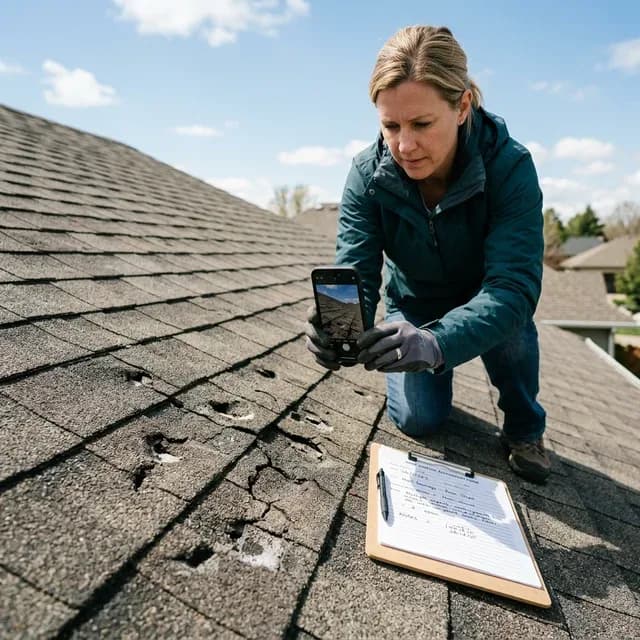
A fallen tree that punches through a roof rarely causes damage in a single, tidy footprint. The impact radiates outward: rafters crack under the sudden load, ridge boards shift, and sheathing delaminates in a zone wider than the visible opening. Branches that slide across the surface before coming to rest can strip granules, tear flashing, and displace shingles along a path several feet from the final resting position. The visible hole is the obvious problem, but the structural assessment around it determines whether the repair is a localized patch or a full section rebuild.
Weight is the underestimated factor. A mature Georgia pine or oak limb can weigh thousands of pounds. Even after the tree is removed, the rafters and trusses that absorbed that load may be permanently deflected. A professional assessment checks not just the roofing surface but the framing beneath it, the bearing walls below, and the ceiling joists that may have flexed enough to crack drywall two rooms away.
Coordinating Removal, Roofing, and Insurance in the Right Sequence
Homeowners often want the tree removed immediately, and that instinct is correct for safety. But the sequence matters for insurance documentation. Before the tree crew cuts and clears, photograph the tree in place from multiple angles, noting where branches contacted the roof, which direction it fell from, and the species and approximate diameter. This evidence is difficult to reconstruct after removal and adjusters rely on it to confirm the cause and scope.
Capital City Roofing coordinates the full sequence: emergency tarping to stop water intrusion, BuilderLync-documented damage assessment, tree crew scheduling, and permanent repair, all tracked through a single claim file. The dual GAF Master Elite and CertainTeed ShingleMaster Premier certifications backing each assessment are detailed on the certifications page. Start with a free 27-point inspection to get the damage scope locked down before repair decisions are made.
Brad Strawbridge
Founder & CEO · Forbes Business Council Member • RT3 & NRAP Board of Directors • GAF Master Elite® • CertainTeed ShingleMaster™ • NRCA Residential & Workforce Development Committees
Brad Strawbridge is the Founder and CEO of Capital City Roofing, bringing over a decade of hands-on expertise to the industry. He is an official member of the Forbes Business Council, the invitation-only community for vetted senior-level business leaders, and serves on the Boards of Directors of the Roofing Technology Think Tank (RT3) and the National Roofing Apprenticeship Program (NRAP). A member of the National Roofing Contractors Association (NRCA), Brad has been appointed to the NRCA Residential Roofing Committee and the NRCA Workforce Development Committee, helping set national standards for installation quality and the future of the roofing labor force. Under his leadership, Capital City Roofing has earned GAF Master Elite and CertainTeed ShingleMaster Premier, the top contractor credential from each manufacturer.