Charleston Hurricane Season Roof Preparation: A Property Owner's Checklist

Charleston's coastal location makes hurricane season a serious concern for every property owner. Use this comprehensive checklist to prepare your roof before the next storm hits the Lowcountry.
Hurricane season in the Lowcountry runs from June 1 through November 30, and for Charleston property owners, preparation is not optional. The combination of coastal wind exposure, heavy rainfall, and storm surge potential makes Charleston one of the most demanding environments for roofing systems in the Southeast.
Whether you own a historic single house on the Battery, a newer construction in Daniel Island, a family home in Mount Pleasant, or a waterfront property on James Island, this checklist will help you prepare your roof before hurricane season arrives.
Understanding Charleston's Wind Zone Requirements
South Carolina's coastal counties fall within the highest wind design categories in the state. The International Building Code (IBC) and International Residential Code (IRC), as adopted by South Carolina, require specific wind resistance ratings for roofing materials in Charleston County:
- Basic wind speed: Charleston County's design wind speed reaches 150 mph in many coastal areas, with some zones requiring materials rated for even higher speeds.
- Exposure Category: Properties near open water (Daniel Island, Isle of Palms, Folly Beach) fall into Exposure D, the most demanding category for wind uplift resistance.
- Wind-borne debris region: Most of Charleston County is classified as a wind-borne debris region, requiring impact-resistant glazing and roofing materials that pass missile impact testing.
These are not suggestions. They are code requirements that affect material selection, installation methods, and the overall cost of roofing projects in the Charleston market.
The Pre-Hurricane Roof Checklist
1. Schedule a Professional Inspection
Start with a professional roof inspection at least 60 days before the historical peak of hurricane season (mid-August through mid-October). A qualified inspector will evaluate:
- Shingle condition: Look for lifted, cracked, or missing shingles that could become entry points for wind-driven rain.
- Flashing integrity: Check all penetration flashings (vents, pipes, chimneys) and wall-to-roof transitions for gaps or deterioration.
- Ridge cap and hip shingles: These are the first components to fail in high winds. Verify they are properly sealed and mechanically fastened.
- Soffit and fascia: Damaged soffits allow wind to enter the attic space and pressurize the roof structure from below, dramatically increasing the risk of roof loss.
2. Verify Hurricane Strap Installation
Hurricane straps (also called hurricane ties or clips) are metal connectors that secure the roof structure to the wall framing. In Charleston County, hurricane straps are required on all new construction and are strongly recommended as a retrofit for older homes.
Types of connectors:
- H-clips: The minimum standard, providing a basic connection between rafter and top plate.
- Hurricane straps: Wrap-around metal connectors that provide significantly greater uplift resistance.
- Engineered connectors: Custom-designed connections for complex roof geometries or historic structures.
If your home was built before 2000, it may lack adequate hurricane straps. A structural inspection can determine whether retrofitting is necessary and what type of connector is appropriate for your roof framing.
3. Inspect and Reinforce the Roof Deck
The roof deck (plywood or OSB sheathing) is the structural layer between your rafters and your roofing material. In high-wind events, the roof deck is often the failure point.
- Nail pattern: South Carolina's wind code requires a specific nailing schedule for roof deck attachment. Older homes may have inadequate nailing that allows the deck to lift in hurricane-force winds.
- Re-nailing programs: Several insurance companies offer premium credits for homes that undergo roof deck re-nailing to current wind code standards.
- Sealed deck systems: For new installations, self-adhering underlayment applied directly to the roof deck creates a secondary water barrier if shingles are lost during a storm.
4. Clear Gutters and Downspouts
Charleston's rainfall during tropical systems can exceed 10 inches in 24 hours. Clogged gutters create water backup that damages fascia boards, soffits, and roof edges.
- Clean all gutters and downspouts thoroughly.
- Verify downspouts direct water at least 6 feet away from the foundation.
- Consider gutter guards if mature trees overhang your roofline.
5. Trim Overhanging Branches
Trees are one of the primary sources of roof damage during hurricanes. Live oaks and other mature trees common throughout Charleston, Mount Pleasant, and James Island can drop heavy limbs onto roofs during high winds.
- Remove dead or dying branches within 10 feet of your roofline.
- For large trees, hire a certified arborist. Improper trimming can make trees more vulnerable to wind damage, not less.
6. Document Your Roof's Current Condition
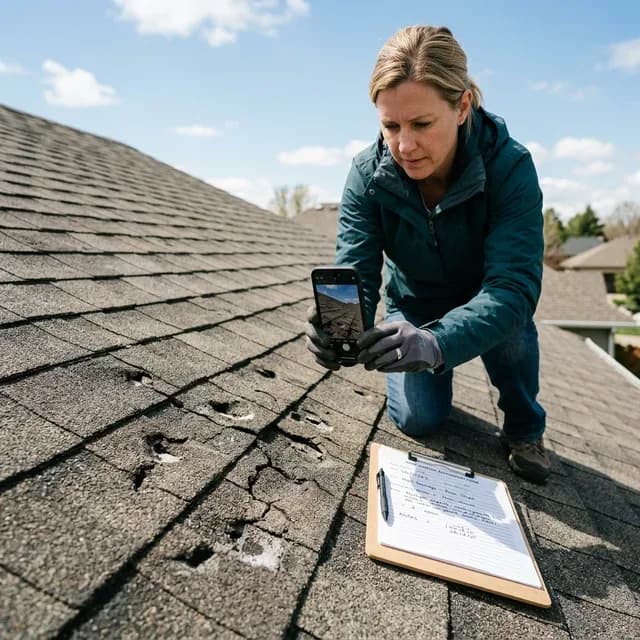
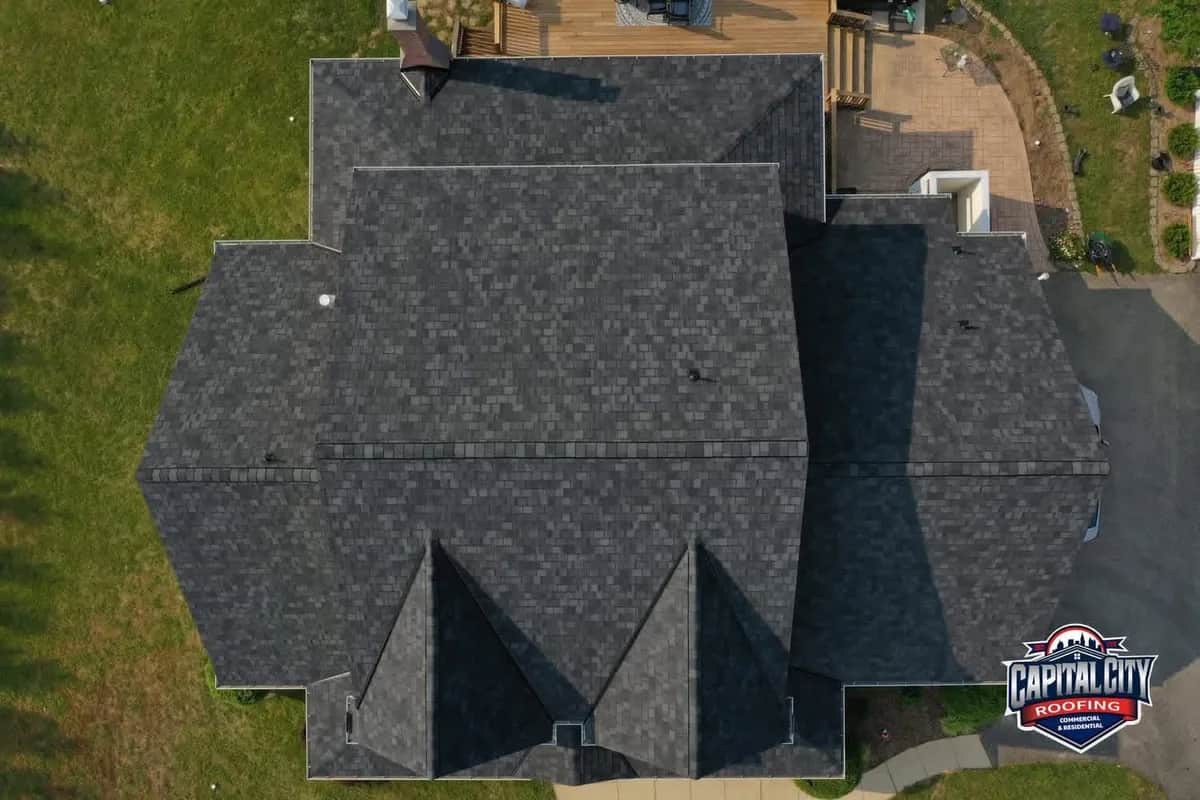
Before hurricane season, photograph your entire roof from multiple angles (drone photos are ideal). Document the condition of shingles, flashings, gutters, and any existing damage.
This documentation serves two critical purposes:
- It establishes a pre-storm baseline for insurance claims.
- It helps your contractor assess storm damage by comparing before-and-after conditions.
For more on storm documentation, see our storm damage documentation guide.
Historic District Considerations
Charleston's Historic District presents additional challenges for roof preparation:
- Material restrictions: The Board of Architectural Review (BAR) regulates roofing materials in the historic district. Standing seam metal, natural slate, and certain architectural shingle profiles may be required.
- Color requirements: Roofing material colors must be approved by the BAR before installation.
- Structural limitations: Many historic structures have framing systems that cannot support the weight of modern impact-resistant materials without reinforcement.
If your property falls within the BAR's jurisdiction, coordinate your hurricane preparation work with an understanding of these requirements to avoid compliance issues.
Insurance Considerations for Charleston Property Owners
South Carolina's coastal insurance market has undergone significant changes in recent years. Several steps can help you maintain adequate coverage:
- Wind and hail deductibles: Many coastal policies carry separate wind/hail deductibles that are percentage-based (often 2% to 5% of the dwelling value) rather than flat amounts.
- Fortified Home designation: The Insurance Institute for Business and Home Safety (IBHS) offers a FORTIFIED designation for homes that meet specific wind-resistance standards. Some South Carolina insurers offer premium discounts for FORTIFIED-designated homes.
- Roof age and replacement cost: Review your policy to confirm whether your roof is covered at replacement cost or actual cash value (ACV). ACV policies can leave significant gaps in coverage for older roofs.
What to Do After a Hurricane
If your Charleston property sustains storm damage:
- Safety first: Do not climb onto a damaged roof. Use binoculars or a drone to assess visible damage from the ground.
- Document everything: Photograph all damage before making temporary repairs.
- Make temporary repairs: Tarp any openings to prevent further water damage. Capital City Roofing offers emergency tarping services throughout the Lowcountry.
- File your insurance claim promptly: Contact your insurer within 48 hours of the storm.
- Get a professional assessment: Schedule a storm damage assessment with a licensed roofing contractor before accepting any insurance settlement.
Prepare Now, Not Later
Hurricane preparation is a project best completed in spring, not August. Material availability, contractor scheduling, and permit processing all become more difficult as hurricane season approaches.
Capital City Roofing serves the entire Charleston metro area, including Mount Pleasant, North Charleston, Goose Creek, Hanahan, James Island, Daniel Island, Summerville, and the surrounding Lowcountry communities. Our team understands South Carolina's coastal building codes and residential roofing requirements specific to this market.
Ready to get your Charleston property hurricane-ready? Schedule a free inspection to identify vulnerabilities before the next storm threatens the Lowcountry.
Brad Strawbridge
Founder & CEO · Forbes Business Council Member • RT3 & NRAP Board of Directors • GAF Master Elite® • CertainTeed ShingleMaster™ • NRCA Residential & Workforce Development Committees
Brad Strawbridge is the Founder and CEO of Capital City Roofing, bringing over a decade of hands-on expertise to the industry. He is an official member of the Forbes Business Council, the invitation-only community for vetted senior-level business leaders, and serves on the Boards of Directors of the Roofing Technology Think Tank (RT3) and the National Roofing Apprenticeship Program (NRAP). A member of the National Roofing Contractors Association (NRCA), Brad has been appointed to the NRCA Residential Roofing Committee and the NRCA Workforce Development Committee, helping set national standards for installation quality and the future of the roofing labor force. Under his leadership, Capital City Roofing has achieved elite certifications held by fewer than 1% of contractors nationwide.