Storm Damage Roof Repair in North Fulton County -- Insurance Claims Guide
A hail storm just hit North Fulton County and your phone is ringing with offers from contractors you have never heard of. Before you sign anything, read this step-by-step guide to the Georgia roof insurance claim process from a GAF Master Elite contractor.
Within 24 hours of a hail event in North Fulton County, the door-knockers arrive. Trucks with out-of-state plates line the streets of Alpharetta, Roswell, Milton, and Johns Creek neighborhoods. Contractors you have never heard of are on your porch offering free inspections and asking you to sign a contingency agreement before you have even looked at your own roof.
Most of these companies are storm chasers. They follow severe weather across the country, collect insurance proceeds, install the cheapest materials available, and leave town before the first warranty claim is filed. The homeowner is left with a roof that might last five years, installed by a company that no longer exists.
This is not a scare tactic. It is what happens after every significant storm in North Georgia. The Georgia Attorney General's office and the Better Business Bureau issue warnings about storm-chasing contractors after every major hail event in the metro Atlanta corridor.
Here is how to protect yourself, navigate the insurance claim process correctly, and ensure your roof is repaired or replaced by a contractor who will be here in five years.
What to Do Immediately After a Storm Damages Your Roof
1. Stay Safe and Document Everything
Do not climb on your roof. Document damage from the ground using your phone's camera:
- Photograph soft metals first. Dents on your mailbox, gutters, downspouts, AC condenser fins, and outdoor light fixtures are the strongest evidence of hail. If the soft metals are dented, your roof took the same hits.
- Photograph any visible roof damage. Missing shingles, debris, displaced ridge caps, or shingle fragments in the yard.
- Timestamp everything. Your phone automatically timestamps photos. Take them the same day as the storm event to establish a clear timeline.
- Save weather reports. Screenshot or download the National Weather Service storm report for your zip code. This establishes the covered event that triggers your insurance claim.
2. Contact Your Insurance Company
File your claim within 24 to 48 hours of the storm. Most Georgia homeowner's policies require prompt reporting. When you call:
- Get your claim number and the name of your assigned adjuster.
- Ask whether your policy is Replacement Cost Value (RCV) or Actual Cash Value (ACV). This determines how much you will receive and when.
- Do not sign anything with a contractor before filing. Your relationship is with your insurance company first. A contractor who pressures you to sign before filing is a red flag.
3. Call a Certified Roofing Contractor, Not a Storm Chaser
After filing your claim, contact a local, certified roofing contractor to perform an independent inspection. Here is how to tell the difference between a certified contractor and a storm chaser:
Red flags (storm chasers):
- Out-of-state license plates and phone numbers
- Pressure to sign a contingency agreement immediately
- Offers to waive your deductible (this is insurance fraud in Georgia)
- Cash-only payment requests
- No verifiable local address or Google reviews
Green flags (certified contractors):
- Local physical address and established online presence
- Manufacturer certifications (GAF Master Elite, CertainTeed ShingleMaster Premier)
- NRCA membership and Roofing Alliance Guarantor Member status
- Willingness to provide references from local projects
- No pressure to sign anything before the insurance process begins
How the Roof Insurance Claim Process Works in Georgia
Understanding the process protects you from being underpaid or misled. Here is the step-by-step sequence:
Step 1: File the claim. You call your insurance company. They assign a claim number and an adjuster.
Step 2: Adjuster visit. The insurance adjuster inspects your roof, usually within 7 to 14 days. They document the damage and produce an initial estimate.
Step 3: Initial estimate. The adjuster's first estimate is often conservative. It may cover obvious damage but miss hidden items like damaged underlayment, compromised flashing, or code-required upgrades (ice and water shield, drip edge, ventilation improvements).
Step 4: Contractor supplement. Your roofing contractor reviews the adjuster's estimate and submits a supplement for any items that were missed or undervalued. This supplement is submitted in Xactimate format, the same software adjusters use, so it speaks the insurance company's language.
Step 5: Re-inspection (if needed). For disputed items, the adjuster may schedule a re-inspection to verify the contractor's supplement. Capital City Roofing meets adjusters on-site for every re-inspection.
Step 6: Approval and work begins. Once the final scope is agreed upon, the insurance company issues payment (or the first installment) and work is scheduled.
Step 7: Final payment. On RCV policies, the insurance company holds back depreciation until the work is completed. Once you submit proof of completion, the depreciation holdback (the remaining balance) is released to you.
ACV vs RCV -- what every North Fulton homeowner should know:
- Replacement Cost Value (RCV): Your policy pays the full cost to replace the roof with like-kind materials at today's prices. Depreciation is held back initially but released after completion. This is the better policy type.
- Actual Cash Value (ACV): Your policy pays the depreciated value of the roof. A 15-year-old roof on a 25-year shingle receives significantly less than full replacement cost. The homeowner pays the gap out of pocket.
Deep dive: Navigating Roof Insurance Claims in Georgia
Why Most Storm Damage Claims Get Underpaid (and What to Do About It)
Insurance adjusters are not adversaries, but they are not advocates either. Their job is to estimate the scope of covered damage based on what they observe during a limited inspection.
The reality is that initial adjuster estimates are frequently 30% to 50% below the actual cost of a complete, code-compliant repair. Common items that get missed or undervalued:
- Underlayment replacement. Adjusters may allow for a simple felt underlayment when Georgia code now requires synthetic underlayment or ice and water shield in certain areas.
- Flashing and pipe boot replacement. These are often reused in the adjuster's estimate even when they are damaged or at end of life.
- Code upgrades. Changes to local building code since the original roof was installed may require additional ventilation, drip edge, or starter strip that the adjuster's initial scope does not include.
- Hidden decking damage. Rotted or water-damaged decking beneath the shingles is not visible until the tear-off begins.
The supplement process exists specifically to close this gap. Capital City Roofing closes that gap because we document every line item in Xactimate format, photograph every detail, and support every supplement with the evidence adjusters need to approve it.
How to Spot Storm Damage on Your North Fulton County Roof
Hail Damage Signs
- Circular dents on soft metals: gutters, downspouts, AC condenser fins, mailbox
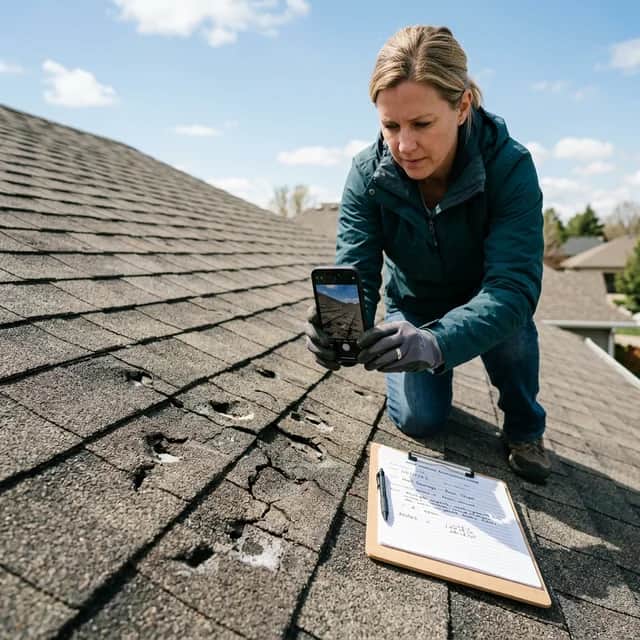
- Displaced granules creating dark circular spots on shingle surfaces
- Cracked or split shingles with exposed fiberglass mat
- Dented or cracked ridge vent
Wind Damage Signs
- Lifted or creased shingles along leading edges (typically on the windward side)
- Missing shingles in directional patterns
- Torn or displaced ridge caps
- Exposed nail heads where shingles have been lifted and reseated
- Displaced drip edge or fascia
Fallen Debris and Tree Impact
- Cracked or punctured roof decking
- Bent or broken gutters
- Branch damage to fascia and soffit
- Displaced flashing around chimneys and walls
Why Hire a Certified Contractor for Storm Damage Repair?
Certification is not a marketing badge. It determines what warranty your new roof qualifies for and how seriously your insurance company takes your documentation.
Capital City Roofing's credentials:
- GAF Master Elite -- top 3% of contractors nationwide, qualifying homeowners for the GAF Golden Pledge limited warranty (25-year materials and workmanship coverage)
- CertainTeed ShingleMaster Premier -- access to CertainTeed's SureStart Plus extended warranty
- Roofing Alliance Guarantor Member -- verified commitment to industry best practices and professional development
- NRCA Member -- National Roofing Contractors Association membership with active committee appointments
Insurance companies process claims faster and approve supplements more readily when the documentation comes from a certified, credentialed contractor with a verifiable track record. A storm chaser with no manufacturer certifications cannot offer the same warranty protection or carrier credibility.
Protecting Your North Fulton County Home Before the Next Storm
The best time to prepare for storm damage is before the storm.
- Schedule an annual inspection. A documented pre-storm condition report establishes your roof's baseline, protecting your claim if damage occurs.
- Upgrade to impact-resistant shingles. Class 4 shingles (GAF Timberline AS II, CertainTeed NorthGate ClimateFlex) survive 2-inch hailstones and qualify for Georgia insurance premium discounts of 5% to 28%.
- Maintain proper attic ventilation. Adequate ventilation reduces heat buildup that accelerates shingle degradation between storms.
- Keep gutters clean. Clogged gutters cause water backup that damages fascia, soffit, and the roof edge.
Whether you are in Alpharetta, Roswell, Milton, Johns Creek, Cumming, or Sandy Springs, storm preparation is the most cost-effective investment you can make in your home.
Do not let an insurance company's first offer become your final answer. Call Capital City Roofing at 470-ROOF-ATL or schedule your free storm damage inspection today.
Related Reading:
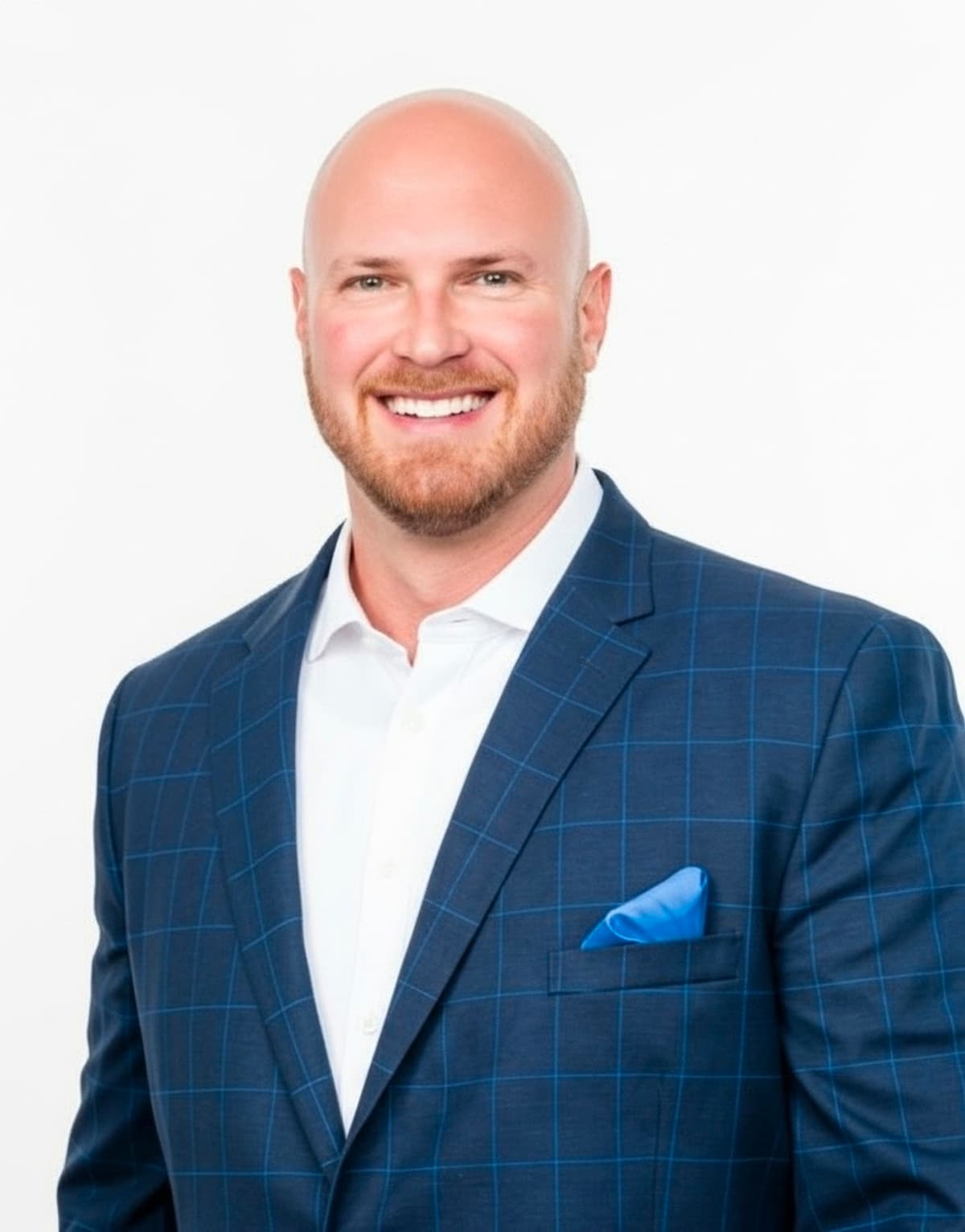
Brad Strawbridge
Founder & CEO · Forbes Business Council Member • RT3 & NRAP Board of Directors • GAF Master Elite® • CertainTeed ShingleMaster™ • NRCA Residential & Workforce Development Committees
Brad Strawbridge is the Founder and CEO of Capital City Roofing, bringing over a decade of hands-on expertise to the industry. He is an official member of the Forbes Business Council, the invitation-only community for vetted senior-level business leaders, and serves on the Boards of Directors of the Roofing Technology Think Tank (RT3) and the National Roofing Apprenticeship Program (NRAP). A member of the National Roofing Contractors Association (NRCA), Brad has been appointed to the NRCA Residential Roofing Committee and the NRCA Workforce Development Committee, helping set national standards for installation quality and the future of the roofing labor force. Under his leadership, Capital City Roofing has achieved elite certifications held by fewer than 1% of contractors nationwide.