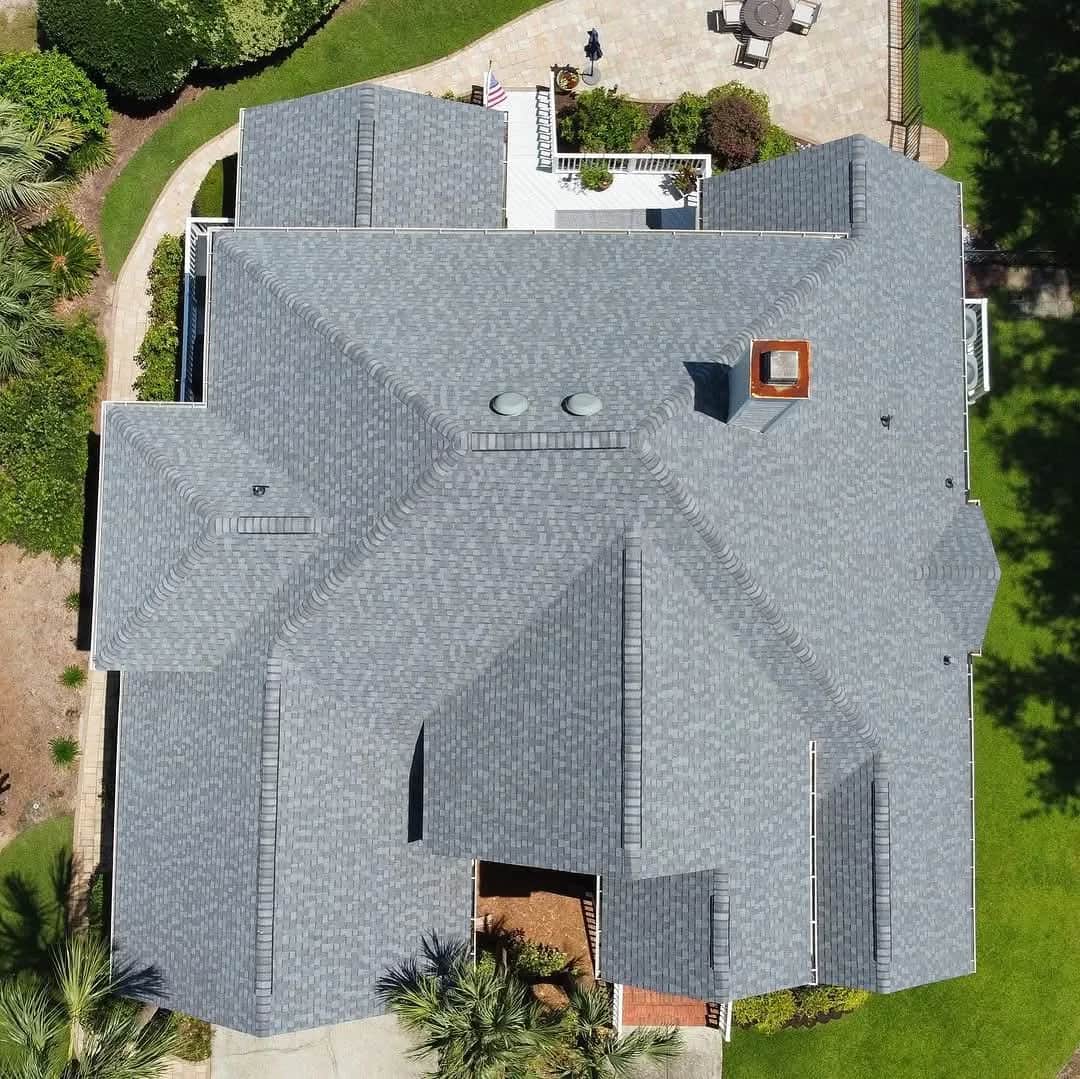
5 Signs You Need a New Roof in Metro Atlanta -- What Every Homeowner Should Know
Most metro Atlanta homeowners do not think about their roof until water is dripping from the ceiling. Here are the 5 warning signs that your roof is failing and what to do before the next Georgia storm makes the decision for you.
Most metro Atlanta homeowners do not think about their roof until something goes wrong. A water stain appears on the bedroom ceiling after a thunderstorm. Shingles are scattered across the yard after a wind event. The insurance company sends a letter saying they will not renew the policy until the roof is replaced.
By that point, the problem is urgent, expensive, and stressful. The homeowner is making a $15,000 to $25,000 decision under pressure, without time to research or compare.
It does not have to work that way. Your roof gives warning signs long before it fails completely. Knowing what to look for puts you in control of the timeline, the budget, and the outcome.
Here are the five signs every homeowner in Alpharetta, Roswell, Milton, Johns Creek, Sandy Springs, Dunwoody, Cumming, and Marietta should watch for.
5 Signs Your Metro Atlanta Roof Needs Replacement
1. Missing, Cracked, or Curling Shingles
Walk your property after every significant weather event and look up. If you see shingles that are missing entirely, cracked down the middle, or curling at the edges, your roof's first line of defense is compromised.
Georgia's intense summer heat is the primary driver of shingle deterioration. Daytime temperatures on your roof surface can exceed 160 degrees Fahrenheit during July and August. That heat breaks down the asphalt binder in shingles over time, causing them to become brittle, crack under thermal stress, and curl as the material contracts unevenly.
Once a shingle curls or cracks, it creates an entry point for water. One compromised shingle can lead to a leak pathway that damages decking, insulation, and eventually the interior of your home.
What to do: If you see a handful of damaged shingles on an otherwise sound roof, a targeted repair may be sufficient. If the damage is widespread across multiple planes, the roof is telling you it has reached the end of its service life.
2. Granule Loss in Gutters and Downspouts
Check your gutters and the ground below your downspouts after a rain. If you see what looks like coarse black sand accumulating, those are granules from your shingles.
Granules are the protective coating on the surface of every asphalt shingle. They serve two critical functions: reflecting UV radiation (which slows the breakdown of the asphalt binder) and providing fire resistance. When granules are lost, the underlying asphalt is exposed directly to the sun, and degradation accelerates rapidly.
Some granule loss is normal on a new roof during the first year as loose manufacturing residue washes off. But if your roof is 10 or more years old and you are seeing heavy granule accumulation in the gutters, the shingles are losing their protective layer. The roof is not failing today, but it is on a countdown.
What to do: Schedule a professional inspection to assess the extent of granule loss. A drone-captured inspection provides a clear picture of which areas are most affected.
3. Your Roof Is Over 20 Years Old
The manufacturer's warranty on standard asphalt architectural shingles says 25 to 30 years. In Georgia, the realistic lifespan is 18 to 22 years.
The difference is climate. Metro Atlanta's humid subtropical environment subjects roofs to a punishing cycle that most northern climates do not produce. Daily temperature swings of 40 degrees or more during summer months cause constant expansion and contraction. UV radiation intensity is among the highest in the eastern United States. Afternoon thunderstorms deliver repeated cycles of heavy rain followed by intense sun.
This thermal cycling and UV exposure degrades shingles faster than the manufacturer's lab conditions predict. A roof that might last 30 years in Minnesota will not last 30 years in Alpharetta.
If your roof was installed before 2006, it is at or past its expected service life in this climate. Even if it looks acceptable from the ground, the underlying integrity of the shingles, underlayment, and flashing may be compromised.
What to do: Do not wait for a visible failure. A proactive inspection at the 18 to 20 year mark gives you time to plan, budget, and choose the right contractor and materials on your timeline rather than in an emergency.
4. Storm Damage You Can See (or Cannot See)
Georgia's storm season runs from March through September, with peak hail and severe thunderstorm activity between April and July. Metro Atlanta sits in one of the most active severe weather corridors in the Southeast.
Hail damage signs: Look for dents on soft metals around your property first. If your mailbox, gutters, downspouts, or AC condenser fins show circular dents, your roof took the same hits. On the roof surface, hail produces circular bruises where granules are displaced, exposing dark asphalt underneath. Severe hail can crack shingles and expose the fiberglass mat.
Wind damage signs: High wind lifts shingles along the leading edge and creases them. Look for shingles that are flipped, folded, or missing entirely in directional patterns. Exposed nail heads where shingles have blown off are immediate leak points. Torn ridge caps and displaced drip edge are additional indicators.
The problem with storm damage is that it is not always visible from the ground. A 1-inch hailstone can bruise a shingle without removing it, creating damage that only shows up during a close inspection or when the next rain event drives water through the compromised surface.
What to do: After any severe weather event, schedule a professional inspection. Capital City Roofing's free 27-Point Inspection uses drone photography to identify damage that a ground-level walkthrough would miss.
Related: Georgia's Storm Season: What Homeowners Should Expect | How to Prepare Your Roof for Storm Season
5. Interior Water Stains, Leaks, or Daylight in the Attic
If you see water stains on your ceiling, active dripping during rain, or daylight visible through the roof boards when you look up in the attic, your roof has already failed at one or more points.
Interior water damage is the final symptom, not the first problem. By the time water reaches your ceiling, it has traveled through multiple layers: shingles, underlayment, decking, insulation, and framing. The actual entry point is often several feet away from where the stain appears inside.
A small, slow leak that goes unaddressed creates conditions for mold growth within 24 to 48 hours in Georgia's humidity. Over weeks and months, that moisture degrades structural wood framing, saturates insulation (destroying its R-value), and can cause ceiling drywall to sag or collapse.
What to do: This is the most urgent sign on this list. If you see active leaks or stains, schedule an inspection immediately. The longer water intrusion continues, the more expensive the repair becomes.
What Should You Do If You Notice These Signs?
Step 1: Document what you see. Take photos and video from the ground. Photograph damaged shingles, granule accumulation in gutters, interior stains, and any storm damage to soft metals around your property. Date and timestamp everything.
Step 2: Schedule a professional inspection. A certified roofing contractor can assess the full condition of your roof, including areas not visible from the ground. Capital City Roofing's free 27-Point Inspection uses drone photography to document every plane, flashing, pipe boot, and penetration.
Step 3: Understand your options. Not every problem requires a full replacement. Isolated damage on an otherwise sound roof can often be repaired. But if the damage is systemic, if the roof is past its expected lifespan, or if multiple signs on this list are present, replacement is the more cost-effective long-term decision.
Does Insurance Cover Roof Replacement in Georgia?
Storm damage: Yes, in most cases. If your roof was damaged by a covered peril (hail, wind, fallen tree, tornado), your homeowner's insurance policy typically covers the full replacement cost minus your deductible. The key is proper documentation and a contractor who can communicate effectively with your insurance company.
Wear and tear: No. Insurance does not cover roofs that have simply reached the end of their service life due to age and normal weathering. This is why proactive replacement before a catastrophic failure is important. A roof that fails from wear and tear leaves you with the full cost.
Capital City Roofing documents every insurance claim with photos, measurements, and BuilderLync reports. We provide Xactimate-formatted estimates that match the exact format insurance adjusters use, and we handle the supplement process when initial estimates fall short of actual repair costs.
Why Metro Atlanta Homeowners Choose Capital City Roofing
- GAF Master Elite certification -- held by only the top 3% of roofing contractors in North America, unlocking the GAF Golden Pledge limited warranty
- CertainTeed ShingleMaster Premier certification -- access to CertainTeed's highest-tier extended warranties
- Free 27-Point Inspection with drone photography and a documented condition report
- **Full Xactimate supplement capability
- Locally owned and operated in Alpharetta, serving every neighborhood across metro Atlanta
Do not wait until the next storm makes the decision for you. Call Capital City Roofing at 470-ROOF-ATL or schedule your free 27-Point Inspection today.
Related Reading:
Brad Strawbridge
Founder & CEO · Forbes Business Council Member • RT3 & NRAP Board of Directors • GAF Master Elite® • CertainTeed ShingleMaster™ • NRCA Residential & Workforce Development Committees
Brad Strawbridge is the Founder and CEO of Capital City Roofing, bringing over a decade of hands-on expertise to the industry. He is an official member of the Forbes Business Council, the invitation-only community for vetted senior-level business leaders, and serves on the Boards of Directors of the Roofing Technology Think Tank (RT3) and the National Roofing Apprenticeship Program (NRAP). A member of the National Roofing Contractors Association (NRCA), Brad has been appointed to the NRCA Residential Roofing Committee and the NRCA Workforce Development Committee, helping set national standards for installation quality and the future of the roofing labor force. Under his leadership, Capital City Roofing has achieved elite certifications held by fewer than 1% of contractors nationwide.