
Hail Damage in Metro Atlanta: Repair or Full Roof Replacement?
Hail hit your metro Atlanta roof? Learn when repair is honest vs when full replacement is smarter. Free 27-point inspection with BuilderLync docs. Dual GAF Master Elite & CertainTeed. Call 470-ROOF-ATL.
After a severe thunderstorm pushes through metro Atlanta, homeowners from Alpharetta to Sandy Springs face an immediate, consequential choice: do you patch damaged shingles or replace the entire roofing system?
When golf ball or quarter-sized hail strikes North Fulton and Forsyth counties, the answer is rarely black and white. Shingle granules cushion initial blows, masking underlying fracture points that fail months later during heavy rain. At the same time, dishonest storm-chasing contractors often push for full replacements on roofs that require only localized repairs.
At Capital City Roofing, our philosophy is rooted in evidence-first evaluation. Headquartered at 360 Winkler Dr, Suite E in Alpharetta, GA, we help homeowners navigate storm damage objectively. Holding dual elite manufacturer credentials as a GAF Master Elite contractor and CertainTeed ShingleMaster Premier contractor, our team evaluates hail impact density, remaining system service life, and structural deck integrity before recommending any course of action.
Every hail evaluation begins with a free 27-point roof inspection documented down to the individual slope using BuilderLync. Homeowners keep the complete photo report and objective assessment regardless of whether they hire us.
How Hail Damages Asphalt Shingles
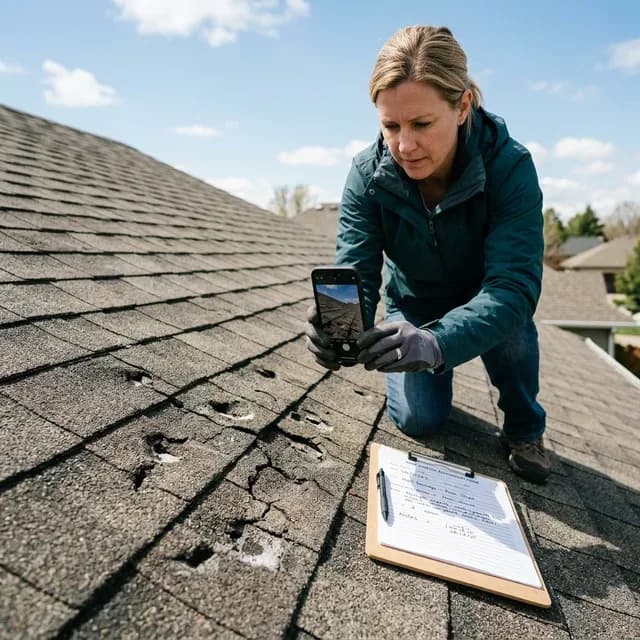
Hail damage on asphalt shingle roofs rarely resembles a dramatic puncture or blown-off section. More often, it produces subtle, compounding structural damage that degrades the shingle's water-shedding capabilities over time.
Primary Forms of Shingle Hail Damage
- Granule Displacement and Mat Fractures: Hail impacts dislodge protective mineral granules, exposing the underlying asphalt-saturated fiberglass mat. When impact energy is concentrated, the fiberglass mat fractures beneath the surface. While the shingle appears intact from the ground, the protective waterproof barrier is broken.
- Hidden Bruising: Similar to an apple that has been dropped, asphalt shingles develop soft bruised areas. When pressed by a trained inspector, these indentations give way under finger pressure, revealing where asphalt binder has cracked and separated from internal fibers.
- Broken Seal Strips: High-velocity hail impacts and accompanying wind gusts break thermal sealant strips bonding individual shingle courses. Unsealed shingles flap during subsequent wind events, inviting wind-driven rain penetration.
- Soft-Metal Collateral Damage: Roof components made of softer metals provide crucial corroborating evidence. Dented aluminum gutters, bruised box vents, dimpled ridge vents, bent pipe boots, and battered air conditioning condenser fins establish hail size and impact trajectory. When soft metals show heavy impact patterns, the shingles above have inevitably absorbed severe force.
Homeowners should never climb onto a steep or wet roof to inspect for hail hits. Slipping hazards and invisible structural weakness make personal roof walks dangerous. For a comprehensive walkthrough on identifying impact signatures, explore our complete guide on hail damage identification, repair, and prevention.
Decision Framework: When to Repair vs. When to Replace
The right decision comes down to a systematic evaluation of roof age, impact density, slope distribution, material availability, and decking condition.
| Evaluation Factor | Honest Repair Criteria | Full Replacement Criteria |
|---|---|---|
| Damage Distribution | Isolated to a single slope or localized section | Widespread impacts across multiple roof slopes |
| Impact Density | Isolated hits or cosmetic marks below functional thresholds | High hit density across multiple slopes with functional mat fractures |
| Roof System Age | Under 12 to 15 years with pliable shingles | Exceeding 15 to 20 years or embrittled shingles |
| Decking Condition | Sound, dry, and fully structurally supportive | Spongy decking, moisture intrusion, or rot |
| Material Availability | Modern shingles with exact color/size match | Discontinued shingle line or faded weathered field |
| Prior Repair History | Clean roof with few or zero prior patches | History of recurring leaks and multiple patched areas |
| Economics | Repair scope is a fraction of replacement cost | Repair cost approaches or exceeds full replacement value |
When Roof Repair Is the Honest Solution
We recommend an isolated repair when:
- Hail impacts are localized to a single directional slope or a small, self-contained roof plane.
- The roofing system is under 12 to 15 years old, retaining flexibility and thermal seal integrity.
- The exact shingle make, model, and profile are available for seamless integration.
- The underlying roof decking is dry, firm, and undamaged.
- The damage is isolated or cosmetic, and a targeted scope restores the water-shedding barrier.
General wear-and-tear and isolated maintenance decisions follow similar rules. For an analysis of everyday roofing decisions, see our guide on roof repair versus roof replacement considerations.
When Full Roof Replacement Is the Smarter Decision
We recommend a complete roof replacement when:
- High-density hail impacts occur across multiple slopes, compromising the overall weatherproofing envelope.
- The shingle fiberglass mat is fractured systematically, allowing ultraviolet light to accelerate asphalt deterioration.
- The roof is 15 to 20+ years old and shingles are brittle, making it impossible to perform repairs without damaging adjacent courses.
- The shingle model has been discontinued by the manufacturer, preventing an effective, code-compliant physical match.
- Inspection reveals widespread deck rot, moisture staining, or compromised underlayment in the attic.
- The cumulative cost of patchwork approaches the investment required for a fully warranted new roof system.
The 27-Point Inspection and BuilderLync Documentation
Determining whether your metro Atlanta home requires repair or replacement should never rely on guesswork. Capital City Roofing follows a rigorous inspection protocol designed to generate indisputable photographic evidence.
Our inspection workflow includes:
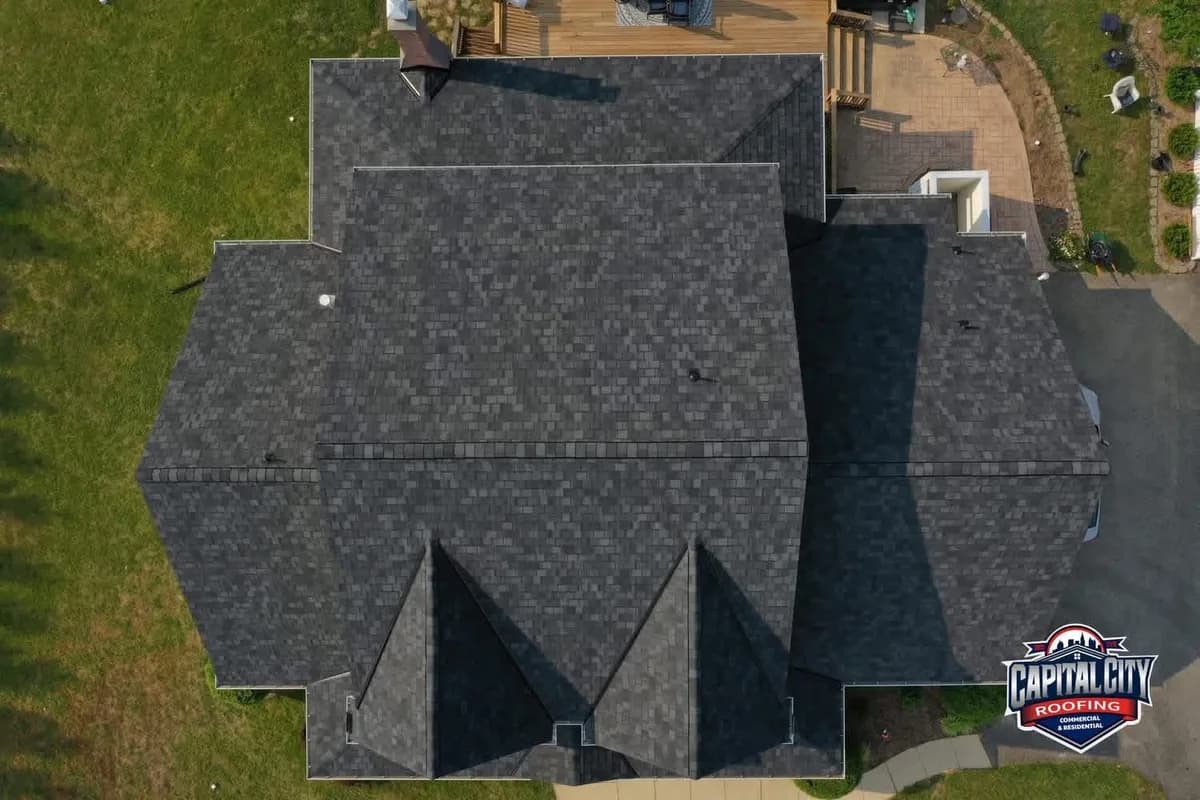
- High-Resolution Aerial and Drone Photography: We capture comprehensive drone imagery of all roof elevations, dormers, and ridges without causing incidental foot-traffic damage.
- Slope-by-Slope Impact Mapping: We conduct standardized 10-foot by 10-foot test square assessments across every directional plane, marking and tallying functional impacts.
- Collateral Soft-Metal Inspection: We document dents on gutters, downspouts, pipe flashing collars, furnace caps, and HVAC units to corroborate storm event severity.
- Attic and Decking Diagnostics: When interior access is available, our inspectors examine the underside of roof decking for moisture stains, mold, split rafters, and daylight penetration.
- BuilderLync Cloud Evidence Package: Every photograph, measurement, and condition note is compiled into our proprietary BuilderLync platform. Homeowners receive the full report for their personal records.
- Written Scope of Work: We provide a transparent, written recommendation outlining exact scopes for localized repair, slope replacement, or full system restoration.
To learn more about our documented storm restoration work in North Fulton, review our Alpharetta storm damage full roof replacement project study.
Georgia Hail Insurance Claims: Key Facts
Sudden hail events are typically covered weather perils under standard Georgia homeowners insurance policies. However, the path between filing a claim and completing work requires clear documentation.
Key insurance considerations include:
- Replacement Cost Value (RCV) vs. Actual Cash Value (ACV): Policies with RCV coverage pay the full cost to repair or replace damaged materials at today's retail market rates, subject to depreciation holdback until work is completed. ACV policies pay only the depreciated value based on roof age.
- Single Deductible Rule: Under Georgia insurance guidelines, your deductible is typically an out-of-pocket obligation per approved claim event, whether the documented scope covers a localized repair or a full system replacement.
- Date of Loss Preservation: Insurers require claims to be tied to a documented storm event. Waiting months after a hail storm can result in denied claims if subsequent weather confuses the date of loss.
- No Coverage Guarantees: Honest contractors never guarantee insurance claim approvals or invent dollar figures before an adjuster inspection.
For complete guidance on insurance claims in North Fulton, review our dedicated Alpharetta roof insurance claim guide and our detailed North Fulton County storm damage roof repair and insurance overview.
Red Flags to Avoid After a Hail Storm
Severe weather attracts opportunistic contractors. Homeowners in metro Atlanta should be on guard against predatory practices that jeopardize their financial safety:
- Out-of-State Storm Chasers: Avoid itinerant crews traveling between storm corridors who lack local offices, permanent Georgia business registrations, or local accountability.
- Illegal Deductible Waivers: It is a violation of Georgia law for roofing contractors to offer to pay, waive, rebate, or absorb a homeowner's insurance deductible. Any contractor proposing this is committing insurance fraud.
- Cash-Only Operations: Never work with contractors who demand unrecorded cash transactions or refuse to provide written contracts, lien waivers, and insurance certificates.
- Premature Tear-Offs: Never allow a crew to start tearing off shingles before a qualified insurance adjuster has inspected the roof and a formal scope has been agreed upon.
- Contingency Agreements Without Scopes: Do not sign blanket representation agreements that hand over your insurance claim rights before you have seen a defined scope of work.
Verify contractor credentials directly through official manufacturer portals. You can verify Capital City Roofing's standing on our official GAF Master Elite contractor profile (Contractor ID: 1148154).
Service Areas Across Metro Atlanta
Capital City Roofing delivers storm damage inspections, honest repairs, and premium roof replacements across the northern metro Atlanta area, including:
- Alpharetta: Our home base. We serve Windward, Avalon, Crabapple, and surrounding communities with rapid storm response. Explore our Alpharetta roofing company overview and residential roofing services.
- Roswell: Serving historic downtown Roswell, Mountain Park, and neighborhoods along the Chattahoochee corridor.
- Milton: Serving acreage estates, equestrian properties, and luxury communities throughout rural North Fulton.
- Johns Creek: Providing architectural shingle restoration and storm damage repairs across established subdivisions.
- Cumming and Forsyth County: Restoring storm-damaged roofs across Lake Lanier communities and fast-growing suburban developments.
- Sandy Springs and Duluth: Delivering residential and commercial roof repairs across Fulton and Gwinnett counties.
If an ongoing storm has caused an active leak inside your home, visit our emergency roof repair service in Alpharetta or our regional storm damage repair hub for immediate dry-in and stabilization.
Frequently Asked Questions
Do I need a new roof or just a repair after hail in metro Atlanta?
It depends on impact density, roof age, deck condition, and whether damage is functional. Localized hits on a younger roof often repair. Widespread bruising or an aging system usually means replacement.
Can hail damage be invisible from the ground?
Yes. Functional bruises are often missed from the street. Soft-metal collateral is the ground-level clue.
Will insurance pay for repair or replacement?
Often yes for sudden hail when damage is functional and documented. Outcome depends on RCV vs ACV, deductible, and scope.
Is my deductible the same for repair and replacement?
Typically one deductible per approved claim event.
How fast should I get an inspection?
Soon, before the next storm confuses the date of loss. Call 470-ROOF-ATL.
What if I only need a repair?
We recommend repair when the evidence supports it.
Schedule Your Free 27-Point Hail Inspection
Do not let unaddressed hail damage compromise your home's structural integrity or lead to preventable interior leaks. Whether your roof needs a clean, durable repair or a comprehensive replacement, Capital City Roofing provides the clarity and documentation you need.
Contact Capital City Roofing today at 470-ROOF-ATL (470-766-3285) or schedule your free 27-point inspection online. You can also visit our corporate office at 360 Winkler Dr, Suite E, Alpharetta, GA 30004 or email us at info@capitalcityroofing.net.
Related Reading:
- Roof Repair vs. Replacement: Making the Right Call
- Hail Damage Identification, Repair, and Prevention Guide
- Storm Damage Roof Repair in North Fulton County Insurance Guide
- Alpharetta Storm Damage Full Roof Replacement Project
- Storm Damage Roofing Services
- Alpharetta Roofing Headquarters and Service Area
Brad Strawbridge
Founder & CEO · Forbes Business Council Member • RT3 & NRAP Board of Directors • GAF Master Elite® • CertainTeed ShingleMaster™ • NRCA Residential & Workforce Development Committees
Brad Strawbridge is the Founder and CEO of Capital City Roofing, bringing over a decade of hands-on expertise to the industry. He is an official member of the Forbes Business Council, the invitation-only community for vetted senior-level business leaders, and serves on the Boards of Directors of the Roofing Technology Think Tank (RT3) and the National Roofing Apprenticeship Program (NRAP). A member of the National Roofing Contractors Association (NRCA), Brad has been appointed to the NRCA Residential Roofing Committee and the NRCA Workforce Development Committee, helping set national standards for installation quality and the future of the roofing labor force. Under his leadership, Capital City Roofing has achieved elite certifications held by fewer than 1% of contractors nationwide.